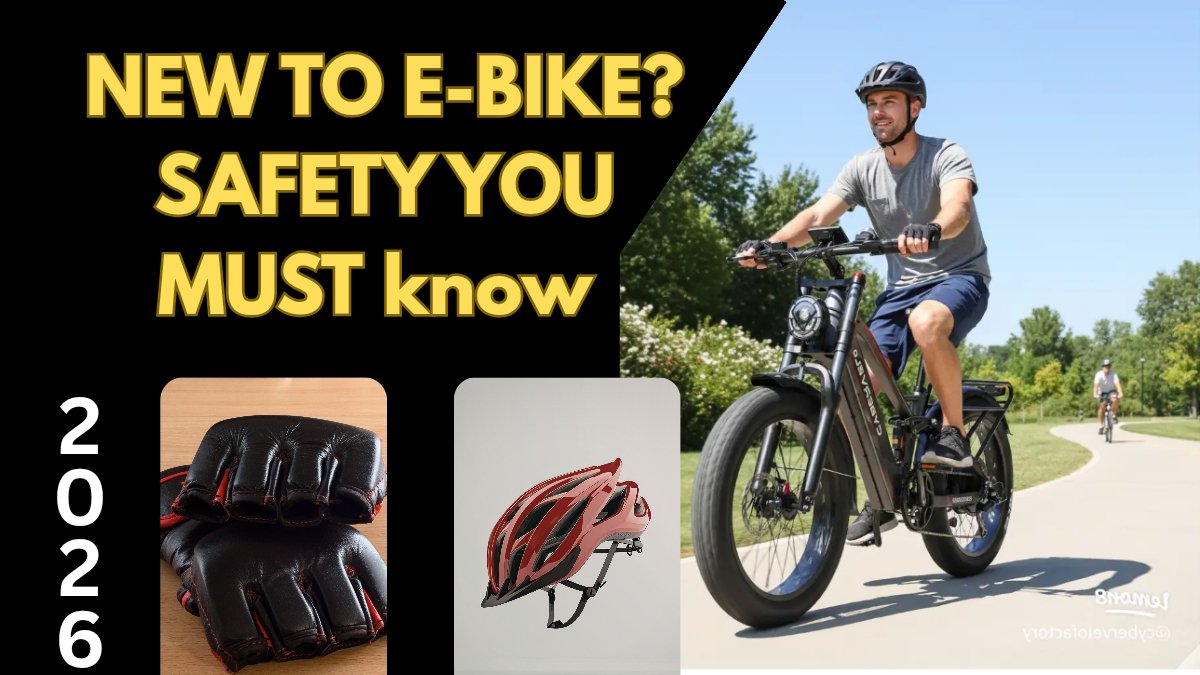
Electric bicycles (e-bikes) have revolutionized personal transportation by bridging the gap between traditional cycling and motorized commuting. The added power, swift acceleration, and sustained speed make hill climbing effortless and long commutes accessible. However, an e-bike behaves significantly differently from a conventional bicycle. The extra weight, instant motor engagement, and higher cruising speeds require a distinct set of handling skills and safety precautions.
Whether you are using an e-bike for daily commuting, fitness, or weekend recreation, mastering basic safety protocols is paramount. Here are ten fundamental safety tips every beginner e-bike rider must follow to ensure smooth, secure, and enjoyable rides.
1. Key Summary of Safety Practices
| Safety Tip | Core Focus Area | Primary Benefit |
| 1. Helmet Selection | Head Protection | Reduces risk of severe traumatic brain injury at higher speeds. |
| 2. Low Assistance Start | Throttle/Pedal Control | Prevents sudden forward surges and loss of control from rest. |
| 3. Early Braking | Stopping Distance | Accommodates heavier bike mass and higher momentum safely. |
| 4. Pre-Ride Checklist | Mechanical Inspection | Identifies tire, brake, and battery issues before leaving. |
| 5. Speed Management | Spatial Awareness | Gives more reaction time in crowded or unpredictable areas. |
| 6. High-Visibility Gear | Rider Conspicuity | Helps drivers and pedestrians see you from a distance. |
| 7. Mounting & Dismounting | Weight Distribution | Prevents tipping accidents when the bike is stationary. |
| 8. Traffic Law Compliance | Road Etiquette | Predictable movements keep you safe in shared traffic lanes. |
| 9. Battery & Charger Care | Electrical Safety | Eliminates thermal risks and preserves long-term battery health. |
| 10. Defensive Riding | Hazard Avoidance | Anticipates mistakes made by surrounding motorists. |
2. Detailed Safety Guidelines for Beginners
1. Invest in a Certified, High-Quality Helmet
Standard bicycle helmets are tested for lower-speed impacts. Because e-bikes comfortably cruise at speeds between 20 mph and 28 mph, investing in a helmet rated specifically for higher speeds is critical. Look for helmets featuring NTA 8776 certification (the Dutch standard designed specifically for speed e-bikes) or models equipped with MIPS (Multi-directional Impact Protection System). Ensure the fit is snug: it should sit level on your forehead, two fingers above your eyebrows, with straps forming a tight ‘V’ under each ear.
2. Start in the Lowest Pedal-Assist Level
The torque delivered by an electric motor can be surprising. When starting from a complete stop, always set your pedal-assist system (PAS) to Level 1 or ECO mode. If you begin in a high assistance mode or accidentally press a thumb throttle while standing still, the bike can lurch forward violently. Once you are rolling smoothly and have established your balance, slowly shift into higher power modes.
3. Master Your Brakes and Practice Stopping Early
E-bikes weigh anywhere from 40 to 75 pounds—significantly heavier than standard road or hybrid bikes. This extra mass, combined with higher travel speeds, increases your overall braking distance.
- Anticipate Stops: Begin squeezing your brake levers earlier than you would on a traditional bicycle to accommodate the increased kinetic energy.
- Brake Distribution: Apply both front and rear brakes evenly. Relying solely on the front brake can cause the front tire to lock up or flip the bike, while relying only on the rear brake can cause skidding.
4. Perform a Pre-Ride Inspection (The ABCDE Check)
Get into the habit of inspecting your e-bike before every ride to prevent mechanical failures on the road:
- Air: Check that tire pressure matches the manufacturer’s recommended PSI printed on the tire sidewall.
- Brakes: Squeeze both levers to ensure firm hydraulic resistance before rolling.
- Chain & Drivetrain: Check for rust, excess grime, or loose links.
- Direct Electrical Connections: Ensure cable connections to the display and motor are tight and undamaged.
- Everything Else: Verify that the battery is locked securely into the frame mounts so it cannot rattle loose during transit.
5. Ride at Speeds Suited for Your Environment
Just because your e-bike can hit 20 or 28 mph does not mean you should ride at top speed everywhere. In crowded urban areas, mixed-use paths, or near pedestrians, drop your speed down to match the flow of traffic. Lower speeds give you crucial reaction time if a pedestrian steps into your path or a car opens its door unexpectedly.
6. Make Yourself Highly Visible
Because e-bikes travel faster than drivers expect a bicycle to move, motorists frequently misjudge an approaching e-bike’s speed. Overcome this visibility gap by making yourself stand out:
- Keep integrated front headlights and rear taillights turned on—even during broad daylight.
- Wear high-visibility fluorescent clothing or reflective vests.
- Mount a handlebar bell or horn to alert pedestrians on blind turns or multi-use trails.
7. Learn Proper Mounting and Dismounting Techniques
The added weight of the battery and motor makes an e-bike feel top-heavy compared to a traditional bike. Never swing your leg over the saddle while squeezing the throttle or pressing heavily on a pedal. Stand squarely over the frame, hold both brake levers firm so the wheels cannot roll, and then step through or over the frame. Keep your feet planted firmly on the ground when stopped at red lights.
8. Follow Traffic Laws and Ride Predictably
E-bikes are classified as vehicles in most jurisdictions and must follow standard traffic laws. Ride in the same direction as traffic, obey stop signs and red lights, and signal your turns clearly using hand signals. Avoid weaving unpredictably between parked cars or switching abruptly between sidewalks and road lanes. Predictable riding allows drivers around you to anticipate your next move.
9. Handle, Charge, and Store the Battery Safely
The lithium-ion battery is the heart of your e-bike, and maintaining it properly prevents electrical hazards:
- Always use the original factory charger supplied by the manufacturer.
- Charge the battery on a hard, flat surface away from flammable items like curtains or carpets.
- Never leave a charging battery unmonitored overnight.
- Store the battery in a dry, climate-controlled space (ideally between 50°F and 70°F) to protect its internal chemistry.
10. Practice Defensive Riding and Anticipate Road Hazards
Never assume a driver sees you, even if you have the right of way. Always scan ahead for common road hazards:
- The “Right Hook”: Cars turning right directly across your path at intersections.
- The “Dooring” Zone: Parked cars whose doors might suddenly open into the bike lane. Maintain at least a 3-foot buffer from parked vehicles.
- Surface Slippage: Wet leaves, gravel, steel construction plates, and painted road lines become extremely slick under heavy e-bike tires. Slow down significantly when turning across these surfaces.
3. Understanding E-Bike Classifications and Local Regulations
Before hitting public roads, it is vital to understand how local laws categorize e-bikes:
Class 1 E-Bikes
Motor provides assistance only when pedaling (no throttle) up to a maximum speed of 20 mph. These are allowed on most multi-use bike paths.
Class 2 E-Bikes
Equipped with a throttle-actuated motor that can propel the bike up to 20 mph without pedaling.
Class 3 E-Bikes
Pedal-assist only (no throttle) up to a maximum speed of 28 mph. Often restricted from natural surface trails and non-motorized paths.
4. Essential Rider Gear for High-Speed Protection
Beyond helmets, proper gear drastically reduces injury risks:
Eye Protection
Riding at 20+ mph exposes your eyes to dust, bugs, and wind tear-out. Wear clear or tinted UV-rated protective glasses.
Abrasion-Resistant Gloves
Full-finger or padded biking gloves protect your hands from road rash during fall slides and improve grip on wet handlebars.
5. First Rides: Safe Practice Environments
Do not head straight into heavy city traffic on your first ride.
Parking Lot Practice
Spend your first 30 minutes in an empty asphalt parking lot testing full stops, tight turns, and low-speed throttle modulation.
Gradual Commute Testing
Test your daily commute route on a quiet weekend morning to identify tricky intersections, road construction, and pothole areas before riding in Monday rush-hour traffic.
Conclusion: Final Takeaway
Transitioning to an e-bike is an exciting, efficient way to travel. By respecting the bike’s extra weight, mastering power modulation, and riding defensively, you build the muscle memory needed to ride confidently. Take your first few rides in an empty parking lot or quiet residential street to get comfortable before tackling busy urban roads or steep trail descents.