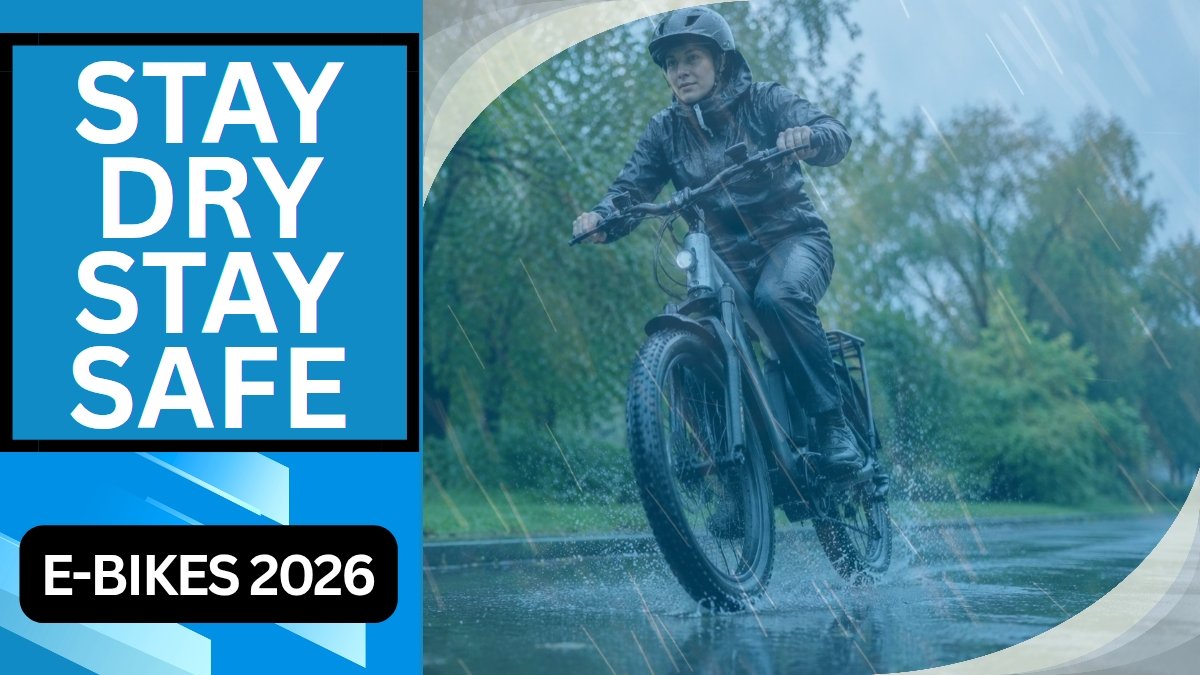
Riding an electric bicycle in rainy weather provides a fast, sustainable way to commute without getting stuck in traffic. However, wet roads, reduced tire traction, diminished braking capacity, and electrical components demand careful preparation. Moisture can cause short circuits in electronic systems, while slick asphalt increases the risk of slipping.
By applying strict wet-weather safety rules and taking key waterproofing measures, you can protect your e-bike’s battery and electronic systems while keeping yourself safe on slick roads.
1. Rainy Day Riding & Maintenance Matrix
| Category | Key Action Item | Safety & Protective Benefit |
| Braking | Brake early & pump levers gently | Prevents wheel lockup, skidding, and hydroplaning. |
| Electrical Care | Check IP ratings (IP65+) & use dielectric grease | Protects battery, controller, and display from moisture damage. |
| Tire Setup | Lower tire pressure by 5–10 PSI | Increases tire contact patch for enhanced wet-weather grip. |
| Rider Visibility | Use active flashing lights & neon outerwear | Ensures drivers can see you through rain-streaked windshields. |
| Post-Ride Care | Wipe down frame & dry battery contacts | Prevents frame rust, bearing corrosion, and electrical short circuits. |
2. Essential Safety Rules for Riding in Wet Conditions
1. Understand Your Brake System and Stopping Distances
Water creates a slick film between your brake pads and rotors, which significantly reduces stopping power.
- Brake Early: Begin braking twice as early as you would on dry pavement.
- Feather Your Brakes: Gently squeeze and release the brake levers repeatedly (“feathering”) while riding. This action clears standing water, mud, and road film from the brake rotors before you need to come to a complete stop.
- Rely on Hydraulic Disc Brakes: If possible, ride an e-bike equipped with hydraulic disc brakes rather than mechanical rim brakes. Disc brakes sit higher off the ground, keeping them cleaner and drier than rim brakes.
2. Lower Your Speed and Reduce Lean Angles
Wet asphalt drops tire traction dramatically. Paint lines, metal manhole covers, railway tracks, and fallen leaves become slick as ice when wet.
- Avoid Aggressive Leaning: Keep your bike upright when taking turns. Leaning heavily into a wet corner reduces tire contact and can cause your tires to slide out unexpectedly.
- Smooth Throttle & PAS Input: Avoid sudden acceleration. High motor torque applied quickly on wet pavement can cause the rear wheel to spin out. Drop your pedal-assist system (PAS) to a lower, manageable level.
3. Adjust Tire Pressure for Better Traction
Over-inflated tires sit rigid on the road, offering a smaller contact patch. Lowering your tire pressure by 5 to 10 PSI allows the rubber to conform better to the road surface, increasing traction over wet asphalt, gravel, and slick road debris.
4. Avoid Standing Puddles and Standing Water
Never ride through deep puddles on an e-bike.
- Hidden Road Hazards: Puddles often conceal deep potholes, sharp debris, or open drainage grates.
- Submersion Risks: Puddle water can splash up into the motor casing, bottom bracket, or battery housing under pressure, bypassing basic water-resistant seals and damaging electrical components.
5. Adopt Defensive Riding and Maximize Visibility
Heavy rain impairs driver vision through streaked windshields and side mirrors.
- Active Lighting: Turn on bright front headlights and rear taillights in flashing mode—even during daylight hours.
- Reflective Apparel: Wear high-visibility yellow, orange, or neon rain jackets featuring reflective paneling across the shoulders and arms to catch car headlights.
3. Waterproofing and Protecting Your E-Bike
While most commercial e-bikes are built to handle light rain and road spray, no e-bike is completely waterproof. Electric components carry an International Protection (IP) rating that defines their level of moisture resistance.
Understanding IP Ratings
Look for e-bikes and electrical components rated IP65 or higher:
- IP65: Protected against dust ingress and low-pressure water jets from any direction.
- IP67: Fully dust-tight and protected against temporary submersion in water.
Components rated below IP54 should not be ridden in medium to heavy rainstorms.
Protecting Key Components
Neoprene Covers
Install neoprene protective covers over your frame-mounted battery and handlebar display screen. Neoprene repels driving rain and keeps cold water from chilling the battery cells.
Dielectric Silicone Grease
Apply a small dab of dielectric silicone grease directly to exposed electrical pin connectors, display plugs, and battery terminals. This creates a waterproof barrier that seals out moisture and prevents corrosion.
Sealing Wire Harnesses
Wrap exposed wire connections or controller box seams with self-fusing silicone tape to prevent water from seeping into electrical joints.
Installing Full-Coverage Fenders
Fenders are an essential accessory for wet-weather riding:
- Protect the Electronics: A rear fender prevents muddy road spray from coating the seat tube, battery mount, and controller housing.
- Protect the Rider: A front fender with an extended mudflap stops water from spraying up into your face, feet, and bottom bracket area.
4. Post-Ride Maintenance Protocol for Rainy Days
What you do after riding in the rain is just as crucial as your pre-ride preparation. Leaving a wet e-bike in a garage causes rapid corrosion and electrical decay.
Step-by-Step Drying Procedure
- Power Off Immediately: Turn off the display console and remove the battery from its frame mount as soon as you arrive indoors.
- Dry the Exterior: Use a soft microfiber cloth to dry the frame, handlebar controls, display screen, and battery housing thoroughly.
- Inspect Electrical Contacts: Check the battery terminal connection points on the frame. If damp, dry them using a clean towel or a low-heat hairdryer held at a safe distance.
- Clean and Lube the Drivetrain: Rain strips away chain lubricant and coats the chain in grit. Wipe the chain clean with a dry rag and reapply a quality wet-weather chain lubricant to prevent rust.
- Store Indoors: Keep your e-bike and battery in a warm, dry, climate-controlled space (50°F to 70°F) to allow any remaining moisture inside the frame channels to evaporate naturally.
Conclusion: Long-Term Reliability in Wet Weather
Riding your e-bike in the rain does not have to damage your investment or compromise your safety. By adjusting your speed, applying protective seals to vulnerable electrical junctions, and committing to a post-ride drying routine, you can comfortably ride through wet seasons while preserving your bike’s motor and battery lifespan.