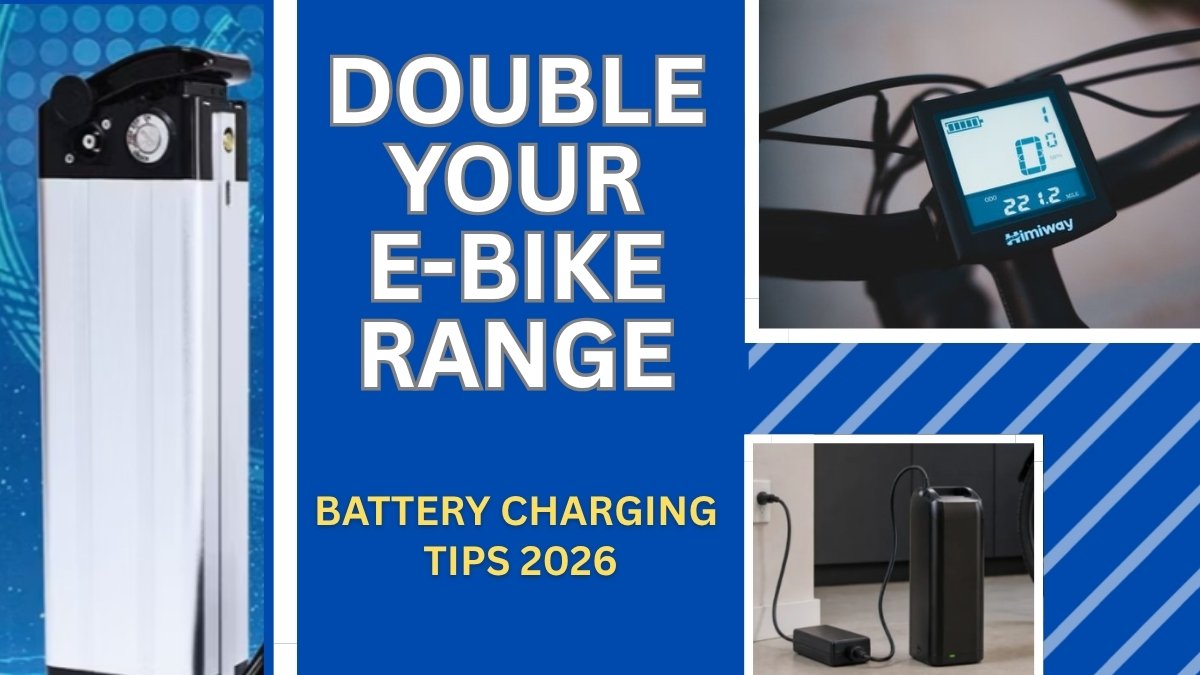
Range anxiety is one of the most common concerns for electric bike owners. Whether you use your e-bike for daily urban commuting, long-distance touring, or weekend trail rides, getting maximum distance out of a single battery charge transforms your riding experience. While battery capacity naturally degrades over several years, your daily riding habits, bike setup, and route choices directly dictate how far you travel on a single charge today.
By understanding the physics of electric assistance and optimizing how you interact with your bike, you can significantly increase your mileage. Here are the most effective, real-world strategies to extend your e-bike battery range on every single charge.
1. Overview of Range-Extending Factors
| Optimization Category | Key Action Item | Impact on Battery Range |
| Riding Technique | Lower pedal-assist level & match optimal cadence | High (+20% to 35% distance) |
| Mechanical Setup | Maintain correct tire pressure & clean drivetrain | Medium (+10% to 15% distance) |
| Route & Speed | Smooth acceleration & momentum management | Medium (+10% to 20% distance) |
| Battery Care | Temperature management & smart charging habits | High (Preserves long-term capacity) |
2. Core Strategies for Range Optimization
1. Optimize Your Pedal-Assist Systems (PAS)
The most direct way to drain your battery quickly is relying heavily on maximum assistance modes (like Turbo, Boost, or High).
- Use Lower Assist Levels: Treat pedal-assist as a supplement to your legs rather than a replacement. Dropping down from “Turbo” to “Eco” or “Tour” mode can nearly double your total distance. Reserve high assistance for steep inclines or heavy headwinds.
- Pedal Away from Stops: The electric motor consumes the highest amount of current when accelerating the bike from a complete standstill. Pedaling manually for the first few tire rotations before relying on motor power saves substantial battery energy.
- Ease off the Throttle: If your e-bike features a twist or thumb throttle, use it sparingly. Throttle-only riding bypasses human pedaling input entirely, pulling maximum continuous current from the battery pack and reducing your range drastically.
2. Maintain Optimal Tire Pressure
Tire pressure is one of the most overlooked mechanical factors affecting electric bike efficiency.
- Reduce Rolling Resistance: Under-inflated tires squish against the road surface, creating friction and forcing the motor to work significantly harder to maintain speed. Keeping your tires inflated to the upper end of the manufacturer’s recommended PSI (printed on the tire sidewall) keeps the contact patch firm and smooth.
- Match Pressure to Terrain: For smooth pavement riding, higher tire pressure yields maximum efficiency. If you ride on gravel or off-road trails, a slightly lower pressure provides traction, but avoid dropping pressure lower than necessary for safety and efficiency.
3. Master Efficient Gear Shifting and Cadence
Riding an e-bike in the wrong gear puts unnecessary strain on both the motor and the battery, similar to driving a manual car up a hill in fifth gear.
- Keep Your Cadence High: Electric motors operate at their highest electrical efficiency when spinning at higher RPMs (rotations per minute). Aim for a smooth, steady pedaling cadence between 70 and 90 RPM.
- Downshift Before Stopping and Climbing: Always shift to a lower (easier) mechanical gear as you approach a red light or begin ascending a hill. Starting or climbing in a high gear draws massive amperage spikes from the battery, generating waste heat instead of forward motion.
4. Manage Speed and Air Resistance
Aerodynamic drag increases exponentially as your speed increases. The faster you travel, the more energy your motor must expend just to push through the air.
- Find the Efficiency “Sweet Spot”: Cruising at 12 to 15 mph consumes dramatically less power than pushing the bike to its 20 mph or 28 mph speed limit. Dropping your average speed by just 2 to 3 mph can yield up to a 20% increase in total distance.
- Adopt an Aerodynamic Posture: Sitting bolt upright acts like a sail against the wind. Tucking your elbows in slightly and leaning forward reduces wind resistance, allowing the motor to maintain momentum with less electrical output.
5. Shed Unnecessary Weight
Every extra pound loaded onto your e-bike requires additional watt-hours from the battery to move across distances, especially when climbing hills.
- Audit Your Cargo: Clear out heavy items from your panniers, rack bags, or backpack that you do not need for the day’s trip.
- Consider Bike Weight: Heavy accessories like steel cargo baskets, heavy-duty locks, and bulky frame attachments add up. Carry only essential tools, hydration, and safety equipment.
6. Maintain a Clean, Lubricated Drivetrain
Mechanical friction anywhere in your bike’s drive system steals energy that should be moving you forward.
- Clean the Chain Regularly: Dirt, sand, and old grease turn into a gritty paste that creates resistance between the chain links, chainrings, and cassette cogs.
- Use Quality Chain Lube: Apply a dry or wet lubricant suited for your local riding conditions. A well-lubricated drivetrain reduces mechanical drag, allows smoother gear shifts, and protects components from wearing down prematurely.
7. Avoid Frequent Stop-and-Go Riding
Constant deceleration and rapid acceleration drain battery capacity faster than steady, continuous riding.
- Anticipate Traffic Signals: Scan the road ahead for red lights, traffic congestion, or pedestrian crossings. Coasting early to slow down naturally allows you to time the green light, keeping the bike in motion and avoiding a complete stop.
- Plan Smoother Routes: Whenever possible, choose routes with dedicated bike paths, long stretches of uninterrupted road, or flatter elevation profiles, even if the total distance is slightly longer.
8. Charge and Store the Battery at Optimal Temperatures
Lithium-ion batteries are sensitive to ambient temperature extremes, which temporarily reduce available capacity and degrade long-term battery health.
- Avoid Extreme Cold: Riding or storing your battery in freezing temperatures (below 32°F / 0°C) slows down internal chemical reactions, reducing your range by up to 20% to 30%. Bring the battery indoors to warm up to room temperature before charging or riding.
- Avoid Excessive Heat: Leaving your battery in direct sunlight or inside a hot car degrades the internal cells. Always charge and store your battery in a dry, climate-controlled environment between 50°F and 70°F (10°C to 20°C).
3. Battery Calibration and Long-Term Health Protocols
Maintaining peak electrical output requires understanding how lithium-ion cells behave over hundreds of charge cycles.
Periodic Full Calibration
Once every few months, drain your battery down to around 5% to 10% capacity, then charge it completely to 100% without interruption. This helps recalibrate the internal Battery Management System (BMS) display reader so your battery percentage gauge remains accurate.
Partial State-of-Charge Storage
If you plan to store your e-bike without riding for several weeks or months, never leave the battery fully charged or completely drained. Maintain a 40% to 60% charge state to prevent chemical degradation inside the lithium cells.
4. Upgrading Hardware for Maximum Range
When riding habits alone are not enough to reach your target distance, targeted hardware upgrades provide additional range:
Installing Dual-Battery Systems
Many modern e-bikes support dual-battery adapters that allow two battery packs to connect in parallel, doubling total capacity (e.g., from 500Wh to 1,000Wh+) without overloading system wiring.
Upgrading to High-Efficiency Slick Tires
Replacing wide, knobby off-road tires with smooth urban touring tires drastically cuts down rolling resistance, adding immediate range gains on paved routes.
Conclusion: Mastering Daily Efficiency
Extending your e-bike battery range is not about making massive sacrifices; it is about combining small, intelligent adjustments. By keeping tire pressure optimal, maintaining a smooth pedaling cadence, and avoiding excessive Turbo-mode usage, you can easily squeeze 30% to 50% more miles out of every single charge.