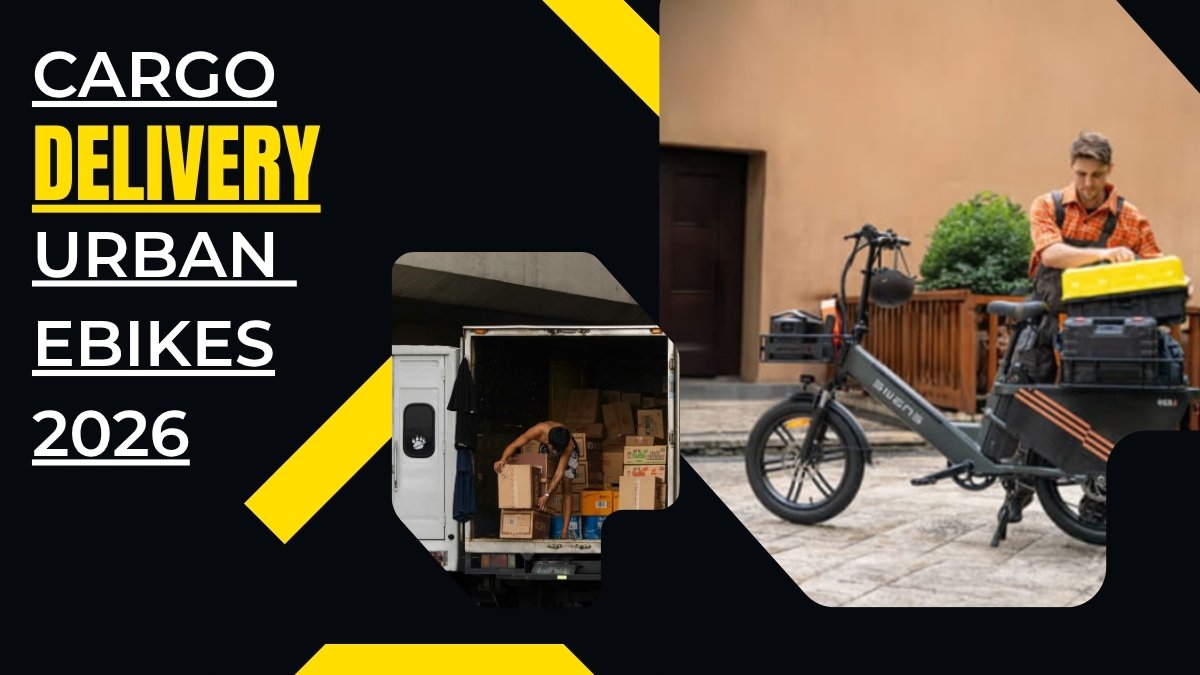
Urban logistics is experiencing its most radical shift since the widespread adoption of the gasoline-powered delivery van. As global e-commerce volumes rise and cities become more densely populated, traditional last-mile delivery models are hitting a breaking point. Delivery vans—long the backbone of parcel distribution—are increasingly stuck in urban gridlock, idling in traffic, emitting pollutants, and racking up costly parking tickets while blocking narrow city streets.
In response, major logistics operators, gig-economy platforms, and quick-commerce companies are turning to a lighter, cleaner, and significantly more nimble alternative: cargo e-bikes. Combining high-torque electric motors, heavy-duty frame design, and sophisticated fleet telematics, cargo e-bikes are emerging as a core component of modern commercial logistics.
1. The Last-Mile Bottleneck and the Failure of Vans
The “last mile”—the final leg of a parcel’s journey from a distribution hub to a customer’s doorstep—is notoriously the most expensive, inefficient, and polluting segment of the entire supply chain.
Traditional delivery vans face severe operational hurdles in metropolitan areas:
- Gridlock and Slow Average Speeds: In dense city centers, average traffic speeds for delivery trucks frequently drop below 10 mph during peak hours.
- Curb Competition and Parking Fines: Finding legal unloading space near high-rise residential or commercial buildings is nearly impossible. Vans often double-park, incurring millions of dollars in municipal parking penalties annually.
- Low-Emission Zone Restrictions: Cities across Europe, Asia, and North America are enforcing strict zero-emission zones, heavy-vehicle bans, and congestion pricing schemes that financially penalize diesel and petrol vans.
Cargo e-bikes bypass these pain points entirely. Capable of utilizing dedicated bike lanes, bus lanes, and pedestrianized zones, e-cargo bikes navigate through congested corridors, park directly at curbside drop-off points without blocking traffic, and operate fully exempt from urban congestion charges.
2. Engineering Evolution: Designed for Commercial Freight
Early attempts at bicycle delivery relied on standard cycles fitted with basic front baskets or light rear racks. Today’s commercial cargo e-bikes, however, are purpose-built industrial machinery designed to haul substantial freight over long operational shifts.
Heavy-Duty Chassis Configurations
Models are available in two-wheeled (longjohn), three-wheeled (trike), and four-wheeled quadricycle formats. Industrial quads feature covered cargo boxes offering up to 2,000 liters of volume and payload capacities between 300 lbs to over 600 lbs (135 kg to 270 kg).
High-Torque Mid-Drive Motors
Electric motors optimized for cargo bikes deliver high low-end torque (often exceeding 85 to 120 Nm). This allows riders to start smoothly on steep inclines even when fully loaded with heavy packages.
Dual-Battery & Swappable Systems
To support continuous commercial operations without hours of charging downtime, fleets use hot-swappable dual-battery configurations that allow 80 to 100+ miles of range per shift.
Low-Maintenance Belt Drives
Traditional metal chains are increasingly replaced by grease-free carbon belt drives paired with internal gear hubs, drastically lowering maintenance cycles and eliminating chain drops during deliveries.
3. Economic and Operational Efficiency
While environmental benefits are significant, the primary driver behind cargo e-bike adoption among major logistics companies is bottom-line economic performance.
Field studies conducted by urban logistics researchers consistently show that cargo e-bikes can complete delivery routes up to 30% to 60% faster than delivery vans in dense city cores. Because e-couriers spend far less time searching for parking and walking from distant loading bays, their overall drop-rate per hour is considerably higher.
Furthermore, the total cost of ownership (TCO) of a cargo e-bike—including purchasing price, energy consumption, insurance, and routine servicing—is a fraction of the capital required to purchase and maintain a commercial delivery van.
4. Urban Micro-Hubs and Infrastructure Integration
The successful deployment of cargo e-bikes depends heavily on a new urban logistics infrastructure model centered around Micro-Fulfillment Hubs.
Logistics operators no longer rely solely on massive regional sorting facilities located on city outskirts. Instead, major carriers utilize small, localized micro-hubs—converted parking garages, underutilized retail spaces, or modular container pods—positioned directly within inner-city neighborhoods.
Inbound Feeder Stage
Large electric trucks or consolidation vans bring bulk shipments into the neighborhood micro-hub early in the morning.
Local Sorting Stage
Packages are sorted into localized neighborhood routes.
Outbound Micro-Mobility Stage
E-cargo couriers load their vehicles at the micro-hub and perform fast, short-radius last-mile deliveries within a 2-to-5-mile radius.
This hub-and-spoke model eliminates the need for oversized trucks to enter densely populated city centers, replacing heavy vehicular traffic with clean micro-mobility routes.
Key Market Specifications & Fleet Metrics
| Feature / Metric | Commercial Cargo E-Bike Fleet Standard |
|---|---|
| Payload Capacity | 250 lbs – 600+ lbs (110 kg – 270 kg) |
| Cargo Box Volume | 300 L (Compact) to 2,000 L (Quadricycle) |
| Motor Torque Rating | 85 Nm – 120+ Nm (Commercial Mid-Drive) |
| Operational Range | 50 – 100+ miles (Dual Swappable Battery Setup) |
| Maintenance Drive System | Gates Carbon Belt Drive & Internal Hub / Planetary Gearbox |
| Emissions Profile | 0 Direct Tailpipe Emissions |
5. IoT Telematics, Fleet Management, and AI Route Optimization
Modern commercial cargo e-bikes are no longer simple mechanical transport tools; they are fully connected IoT assets integrated into enterprise logistics software.
Real-Time Fleet Telematics
Fleet managers monitor real-time vehicle metrics across hundreds of deployed units simultaneously. Integrated sensors track battery charge states, motor temperature, tire pressure, and cargo box access logs, notifying maintenance teams before mechanical failures occur.
AI-Driven Micro-Routing
Dynamic routing software plans delivery routes specifically tailored to e-cargo bike capabilities. Algorithms route couriers through wide cycle tracks, low-traffic alleyways, and pedestrian plazas while avoiding steep steps or dangerous multi-lane vehicular corridors.
Predictive Package Drop Sequencing
Algorithms sequence package drops based on real-time traffic conditions, building accessibility, and customer availability windows, ensuring maximum delivery success rates per hour.
6. Regulatory Frameworks, Subsidies, and Municipal Policies
City governments play a decisive role in accelerating the commercial shift toward clean micro-mobility freight networks.
Direct Corporate Financial Incentives
Municipalities across Europe and North America offer business grants, tax credits, and purchase vouchers to subsidize up to 30% of the upfront acquisition cost for commercial e-cargo fleets.
Preferred Access and Curbside Allocations
Cities are designating dedicated “E-Cargo Only” loading zones directly in high-density shopping districts, granting e-couriers priority access to drop off goods while traditional delivery vans face strict loading curfews.
Low-Emission Zone Enforcement
Expanding zero-emission mandates in major city centers continue to phase out internal combustion delivery vehicles, making e-cargo fleets the only legal option for last-mile freight operations.
7. Challenges and Future Outlook
Despite rapid growth, the cargo e-bike sector faces distinct scaling challenges that urban planners and fleet operators must address:
Infrastructure Bottlenecks
Traditional bicycle paths were designed for single-rider bikes. As cargo e-bikes widen (often reaching 80 cm to 100 cm in width), cities must construct wider, heavy-duty cycle tracks capable of handling passing maneuvers and heavier wheel-loads.
Payload Limits
E-cargo bikes cannot completely replace vans for bulky furniture, heavy construction materials, or large freight items. A hybrid fleet model remains necessary for specialized freight.
Weather & Driver Safety
Operating in harsh winter climates, heavy rain, or extreme heat requires specialized vehicle enclosures, heated grips, weather-resistant cargo boxes, and driver safety gear.
Conclusion: The New Backbone of Urban Freight
The transition toward commercial cargo e-bikes represents far more than an eco-friendly trend—it is a fundamental restructuring of urban freight economics. By combining low operational costs, agile navigation through congested streets, smart IoT telematics, and zero direct emissions, cargo e-bikes have established themselves as the ultimate solution to the last-mile logistics crisis. As city infrastructure continues to adapt, the e-cargo revolution will define the future of clean, efficient urban commerce.