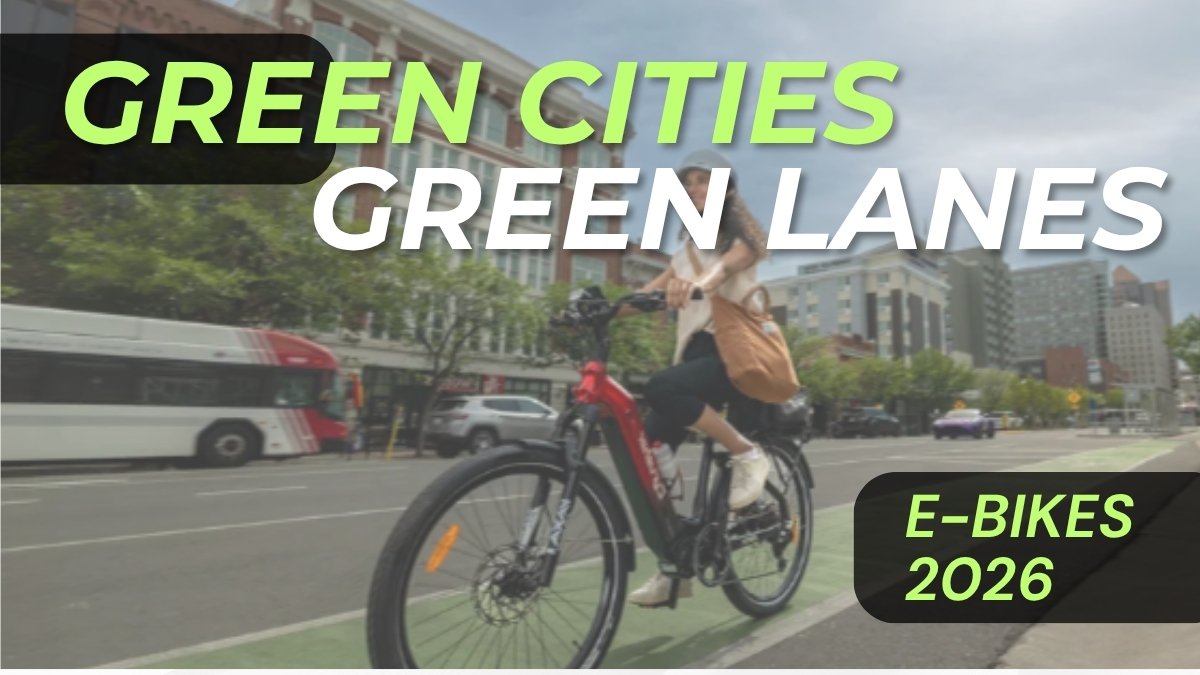
The rapid global rise of electric bicycles (e-bikes) has reshaped urban transportation. Far faster and heavier than traditional pedal cycles, yet drastically more sustainable and space-efficient than passenger cars, e-bikes have exposed the limitations of traditional urban street planning.
Paint-only bike lanes, narrow pathways, and car-centric street layouts no longer suffice in high-density corridors. Cities worldwide—from Paris and London to Seattle, Bogota, and Tokyo—are executing sweeping infrastructure upgrades designed specifically to accommodate micro-mobility at scale. Modern municipalities are actively transforming their physical layouts, transit hubs, electrical grids, and urban policy to build integrated e-bike networks.
1. The Transition from Painted Paths to Physical Separation
The most significant change in modern street engineering is the elimination of painted, unprotected bike lanes on major thoroughfares. Because e-bikes maintain higher average cruising speeds—typically between 15 mph and 28 mph (25 km/h to 45 km/h)—riding them alongside heavy automobile traffic poses severe safety risks.
Hardened Concrete Barriers
Cities are replacing plastic flex-posts with cast concrete curbs, raised medians, and heavy planter boxes that physically separate cycle tracks from vehicular lanes. This physical protection reduces vehicle encroachment and eliminates dangerous door-zone accidents along curbside parking stretches.
Speed-Differentiated Lanes
Urban planners are designing multi-tier arterial lanes. Low-speed zones accommodate traditional cyclists and foot traffic, while wider express bypass lanes allow faster e-bikes and cargo bikes to overtake safely without encroaching on footpaths or traffic corridors.
Grade-Separated Cycle Superhighways
Long-distance cycleways connecting outer suburbs directly to downtown commercial hubs are built completely off-road or raised above street grade. These express corridors allow suburban commuters to bypass car gridlock altogether while maintaining consistent top speeds across long distances.
2. Redesigning Intersections for Micro-Mobility
Intersections remain the most vulnerable conflict zones for cyclists. As e-bike acceleration allows riders to enter intersections faster than drivers traditionally expect, cities are implementing structural roadway changes to prevent blind-spot collisions.
Dutch-Style Protected Intersections
By incorporating island curbs at corners, cities force turning automobiles to slow down and hit a perpendicular angle when crossing bike paths. This design keeps cyclists visible to drivers before any potential collision point and creates safe staging zones for turning bikes.
Dedicated Bike Traffic Signals
Traffic lights are increasingly outfitted with micro-mobility signals programmed with an “Early Green” phase. Giving e-bikers a 3-to-5-second head start clears the intersection before motorized vehicles begin moving, reducing right-hook accidents.
Inductive Loop and Camera Sensors
Automated traffic management systems use roadway sensors and optical cameras tuned to detect approaching e-bikes. These smart systems hold green lights open longer for cycle platoons during peak commuting hours, prioritizing active transit over low-occupancy vehicles.
Key Infrastructure Upgrades: Traditional vs. E-Bike Centric Design
| Infrastructure Element | Legacy Cycling Setup | Modern E-Bike Infrastructure |
| Pathway Width | 4 to 5 feet (Single file) | 8 to 12 feet (Allows overtaking & e-cargo bikes) |
| Barriers | Painted lines or plastic posts | Concrete curbs, raised grade, or planters |
| Intersection Layout | Shared turning lanes | Protected Dutch-style corners with dedicated signals |
| Parking & Storage | Open metal bike racks | Enclosed smart lockers with integrated charging |
| Public Transit Integration | Front-bus racks / staircase ramps | At-grade roll-on trains & station mobility hubs |
| Grid Power Support | No grid connection | Smart charging kiosks & solar micro-grids |
3. Smart Micro-Utility Networks and Charging Hubs
Range anxiety and battery management are primary concerns for long-distance e-bike riders. To support daily adoption, municipal utility departments are integrating bike-charging infrastructure directly into city power grids.
On-Street Public Charging Lockers
Secure, weather-proof charging kiosks are being installed near commercial centers, transit stations, and public parks. Riders can lock their batteries or entire bikes inside secure compartments powered by universal high-speed charging connections while shopping or working.
Commercial Delivery E-Hubs
E-cargo bikes are rapidly replacing urban delivery vans for last-mile logistics. Cities are allocating dedicated micro-hub curbside spaces equipped with heavy-duty battery swap stations, allowing commercial logistics couriers to swap depleted batteries for fresh packs in seconds.
Grid-Integrated Share Stations
Shared e-bike docks are tied directly into municipal power grids, incorporating solar canopy roofs to supply clean, renewable energy to dock fleets. Smart load balancing ensures high charging efficiency without overloading localized city grids during peak electrical demand hours.
4. Integration with Public Transit and Intermodal Hubs
A critical component of modern urban planning is “intermodality”—making it effortless for commuters to combine an e-bike ride with a train, bus, or ferry trip to cover long regional distances.
At-Grade Roll-On Transit Access
Transit agencies are retrofitting regional train cars and light-rail vehicles with dedicated open floor space, wider access doors, and floor-mounted tie-downs to handle heavier e-bikes without blocking aisles.
Stationary Secure Parking Facilities
Major train stations are constructing multi-story, high-security cycle parking garages equipped with automated badge access, CCTV surveillance, and fire-suppression systems optimized for lithium-ion storage.
Unified Transit Ticketing (MaaS)
Mobility-as-a-Service platforms allow riders to unlock shared street e-bikes, board commuter trains, and access secure parking facilities using a single digital ticket or smart transit card.
5. Accommodating Heavy E-Cargo Bikes and Inclusive Mobility
The popularity of heavy-duty utility e-bikes—such as family cargo bikes carrying children or commercial freight vehicles carrying packages—requires a complete overhaul of pathway geometry.
Widened Turning Radii
Municipal engineers are redesigning curb cutouts and pathway chicanes. Tight 90-degree turns that accommodated traditional light bicycles are being widened to allow long-wheelbase cargo bikes to navigate without swinging into pedestrian zones or automobile traffic.
Reinforced Pavement Specifications
Because e-cargo bikes carry total loads exceeding 400 lbs (180 kg), pathways are being built with reinforced asphalt and concrete sub-bases that resist rutting, cracking, and water intrusion over years of heavy use.
Barrier-Free Curb Ramps
High-speed, heavy-duty e-bikes require smooth transitions between street and sidewalk levels. Smooth, flush curb ramps prevent rim damage, loss of traction, or tipping under heavy loads.
6. Smart Traffic Management and V2X Communication
As cities become digitized, e-bikes are being integrated into municipal Intelligent Transportation Systems (ITS) through vehicle-to-everything (V2X) communication.
Connected V2X Safety Alerts
Transmitters mounted on e-bikes communicate directly with nearby connected cars and city traffic controllers. If an approaching driver fails to see an e-bike around a blind curve, the V2X network triggers immediate visual and auditory collision warnings inside the automobile cabin.
Dynamic Speed Management in Pedestrian Zones
Through geofencing technology, city authorities can automatically throttle the speed limits of commercial or shared e-bikes in high-density pedestrian zones, ensuring safety without requiring constant physical policing.
Micro-Mobility Data Mapping
Aggregated GPS data from connected e-bikes helps urban planners map traffic bottlenecks, road surface damage, and popular transit corridors in real-time, allowing municipal governments to allocate infrastructure budgets with extreme precision.
7. Policy Reforms, Speed Governance, and Legal Reclassification
Physical infrastructure is only half the equation; municipal legal frameworks are being updated to govern high-speed micro-mobility fairly and effectively.
Modernizing Class System Regulations
Regulators are refining the 3-tier e-bike classification system (Class 1, Class 2, and Class 3) to clearly delineate where high-speed throttle bikes can operate. High-speed Class 3 models are increasingly directed onto protected express tracks rather than shared pedestrian footpaths.
Subsidies and Tax Incentives for E-Bike Adoption
To encourage car-free commuting, progressive cities are offering direct point-of-sale vouchers, tax credits, and cash-back incentives for citizens purchasing e-bikes, with extra subsidies allocated for heavy-duty e-cargo models.
Low-Emission Zones (LEZs) and Commercial Van Restrictions
Urban centers are enacting strict Low-Emission Zones that restrict gasoline delivery vans from city centers during business hours, accelerating the corporate adoption of commercial e-cargo fleets for last-mile delivery operations.
Conclusion: Designing the Human-Centric City of Tomorrow
The urban infrastructure revolution is no longer just about retrofitting street corners—it represents a total rethinking of how cities move people and freight. By investing in physically protected networks, smart charging hubs, V2X safety communications, and transit integration, modern municipalities are successfully breaking away from car dominance. Rebuilding urban grids around e-bikes results in quieter streets, cleaner air, reduced congestion, and a far more resilient, human-scaled transportation future.