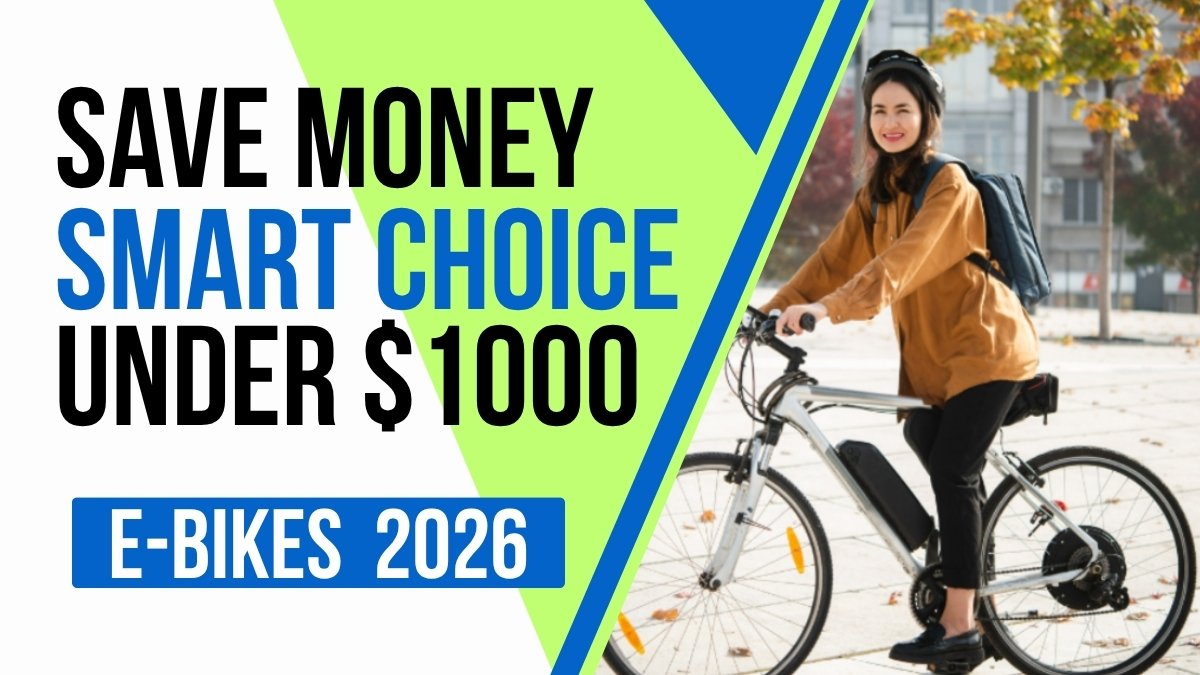
Finding a reliable, cost-effective electric bicycle for daily commuting no longer requires spending thousands of dollars. Thanks to improved supply chains, standardized battery manufacturing, and intense competition among direct-to-consumer brands, sub-$1,000 e-bikes have transformed from unreliable entry-level toys into durable, everyday workhorses.
When buying a budget commuter, the primary goal is balancing motor reliability, battery safety, stopping power, and frame ergonomics. Below is a comprehensive guide to navigating the under-$1,000 e-bike market, including key features to look for, essential trade-offs, and top commuter models worth your investment.
1. What to Expect in the Sub-$1,000 E-Bike Category
Understanding what a $500 to $1,000 budget delivers helps set realistic expectations for daily riding.
Motor Power Capabilities
Most budget commuters feature 350W to 500W rear hub motors (often peaking at 750W). These motors easily maintain Class 1 or Class 2 speeds (up to 20 mph) on flat terrain and mild inclines without overheating.
Real-World Battery Range
While manufacturers often advertise “up to 50 miles,” a realistic expectation for a typical 374Wh to 500Wh battery under throttle and high pedal-assist (PAS) levels is 20 to 35 miles per charge.
Essential Safety Certifications
Modern budget e-bikes increasingly feature UL 2849 (full electrical system) or UL 2271 (battery safety) certifications. Never buy an uncertified e-bike, regardless of how cheap it is.
Component and Build Quality
Expect mechanical disc brakes or entry-level hydraulic brakes, basic cadence sensors (which supply motor power based on pedaling motion rather than pedal pressure), and durable aluminum alloy frames.
2. Top Budget Commuter E-Bikes Under $1,000
1. Lectric XP Lite 2.0 (Best Overall Value & Portability)
- Price: ~$799
- Design: Lightweight Folding Frame
- Key Specs: 300W rear hub motor (374Wh battery), single-speed drivetrain, hydraulic disc brakes, twist-throttle.
The Lectric XP Lite 2.0 is widely considered the gold standard for low-cost, low-maintenance urban commuting. Weighing under 46 lbs, it folds down quickly, making it ideal for multi-modal commutes involving buses, trains, or apartment stairs. Despite its low price tag, Lectric includes hydraulic disc brakes for superior stopping power in rainy conditions. For riders seeking zero drivetrain maintenance, an optional belt-drive version eliminates dirty bicycle grease entirely.
2. Ride1Up Portola (Best Performance & Cargo Utility)
- Price: ~$995
- Design: Compact Folding Utility Bike
- Key Specs: 750W rear hub motor, 8-speed Shimano drivetrain, hydraulic disc brakes, integrated rear rack (130 lb capacity).
If your commute involves steep hills or hauling heavy cargo bags, the Ride1Up Portola punches well above its weight class. Its 750W motor provides rapid acceleration from red lights, while the 8-speed gear system makes climbing steep city streets manageable. The welded rear rack accepts panniers and child seats, converting this compact folder into a daily utility vehicle.
3. Retrospec Beaumont Rev 3 ST (Best Classic City Commuter)
- Price: ~$800–$900
- Design: Step-Through European City Bike Frame
- Key Specs: 350W rear hub motor, 7-speed drivetrain, step-through frame, included rear rack and fenders.
For riders who prefer the upright posture of a traditional city bicycle over small-wheeled folding bikes, the Retrospec Beaumont Rev 3 offers classic aesthetics combined with modern electric assistance. The low step-through frame makes mounting and dismounting effortless, while the included full-coverage fenders keep road spray and mud off work attire during rainy morning commutes.
4. Heybike Cityscape 2.0 (Best Ultra-Budget Option)
- Price: ~$500–$600
- Design: Comfort Step-Through Cruiser / Commuter
- Key Specs: 350W motor, mechanical disc brakes, front suspension fork, integrated lights and rear rack.
For commuters working with a strict sub-$600 budget, the Heybike Cityscape 2.0 provides an accessible entry point into e-biking. While it uses basic mechanical brakes and a simpler cadence sensor, it comes equipped out-of-the-box with daily commuting essentials: headlight, taillight, rear rack, and front suspension to smooth out cracked city pavement.
3. Core Comparison of Top Commuter Models
| Model | Motor Power | Braking System | Weight | Standout Commuter Feature |
| Lectric XP Lite 2.0 | 300W Hub (374Wh) | Hydraulic Disc | ~46 lbs | Belt-drive option, ultra-portable fold |
| Ride1Up Portola | 750W Hub | Hydraulic Disc | ~59 lbs | High-capacity rear rack (130 lbs) |
| Retrospec Beaumont Rev 3 | 350W Hub | Mechanical Disc | ~52 lbs | Classic upright ergonomics & step-through |
| Heybike Cityscape 2.0 | 350W Hub | Mechanical Disc | ~58 lbs | Low cost, fully equipped with accessories |
4. Crucial Features to Prioritize for Daily Commuting
When evaluating budget e-bikes, prioritize components that directly impact safety, weather resistance, and daily usability:
Integrated Lighting Systems
Commuting in winter means riding in the dark. Look for bikes with headlights and taillights wired directly into the main battery so you never have to worry about charging separate clip-on bike lights.
Fenders and Rear Cargo Racks
Fenders protect your clothes from road grime and puddle splashback. A sturdy rear rack lets you attach pannier bags, taking heavy backpacks off your shoulders to prevent sweat and fatigue.
Reliable Braking Power
Hydraulic disc brakes require far less lever force and provide significantly better stopping power in wet weather than mechanical disc brakes. If your budget allows, opt for hydraulic systems.
Removable Battery Packs
If you park your bike in a shared communal storage area or locked outside, a removable battery lets you carry just the power pack inside to charge at your office desk or home kitchen counter.
5. Cadence Sensors vs. Torque Sensors in Budget Bikes
One of the biggest differences between entry-level and premium e-bikes is pedal-assist sensing technology.
How Cadence Sensors Work
Most budget e-bikes under $1,000 utilize cadence sensors. These act like an on/off switch, detecting when the pedals are turning and delivering a pre-set amount of motor assistance based on your current PAS level, regardless of how hard you pedal.
Why It Matters for Commuters
While cadence sensors require less physical effort on flat streets, power delivery can feel slightly delayed. Knowing how to toggle assist levels prevents sudden surges when navigating tight city corners.
6. Battery Care and Lifespan Extension
Batteries are the most expensive component of an e-bike. Proper maintenance ensures your budget pack lasts for years.
Avoiding Thermal Extremes
Never charge your battery in sub-freezing temperatures or leave it exposed to high summer heat inside a parked car. Extreme temperatures degrade lithium-ion cells prematurely.
Optimal Storage Charge Levels
If you plan to store your e-bike without riding for more than a couple of weeks, leave the battery charged between 50% and 70% rather than fully empty or 100% full.
7. Key Maintenance Tips for Budget E-Bikes
Budget components require regular care to maximize their operational lifespan:
- Check Tire Pressure Weekly: Under-inflated tires increase rolling resistance, drastically reducing battery range and increasing flat tire risks.
- Keep the Drivetrain Clean: Unless you buy a belt-drive model, degrease and lubricate your chain every 100 miles to prevent drivetrain wear.
- Inspect Brake Pads Monthly: E-bikes are heavier and travel faster than standard bikes, wearing through brake pads faster. Check pad thickness regularly.
Conclusion: Making the Right Budget Choice
Navigating the sub-$1,000 e-bike market comes down to identifying your daily commuting priorities. If portability and low maintenance are paramount, lightweight folders like the Lectric XP Lite 2.0 lead the class. If hill climbing and hauling capacity are required, high-torque utility models like the Ride1Up Portola excel. By prioritizing verified UL safety certifications and performing basic routine maintenance, an affordable electric bike can deliver years of fast, eco-friendly, and cost-effective daily transportation.