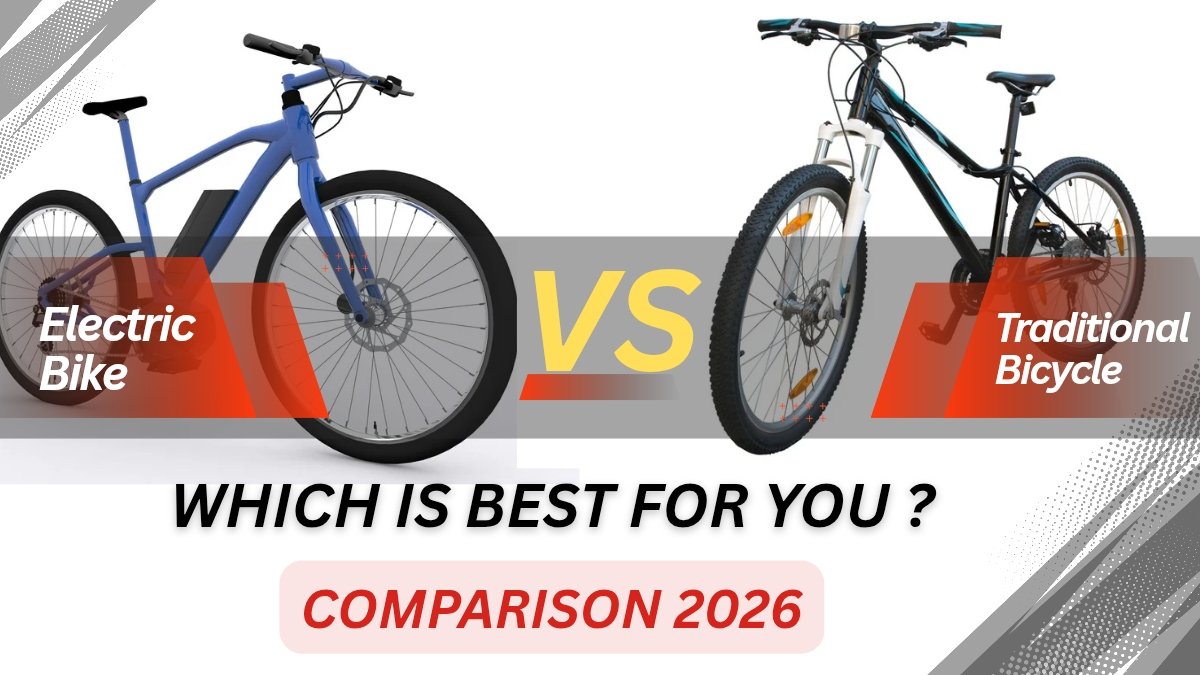
Choosing between an electric bike (e-bike) and a traditional bicycle comes down to understanding two fundamental approaches to personal transportation.
On one hand, conventional bicycles rely entirely on human power. They are lightweight, budget-friendly, low-maintenance, and ideal for serious physical fitness. On the other hand, e-bikes incorporate an electric motor and a rechargeable battery system, making uphill rides effortless, extending travel distance, and offering a viable alternative to driving a car.
For years, I was completely loyal to my traditional bicycle because I loved the simple workout and didn’t think I needed a motor. But when I moved further away from work, riding my regular bike left me completely exhausted and sweaty before my workday even started. Once I switched to an e-bike, I realized I could still pedal and stay active, but I was arriving at work fresh, carrying groceries without struggling, and riding way more often than I ever did before. Now, I use my e-bike for daily commutes and keep my traditional bike for light weekend workouts.
Your decision should depend on your personal health goals, daily commuting distance, local topography, and overall budget. Below is a detailed, practical breakdown comparing both options across key categories like health, usability, ongoing maintenance, and financial investment.
Key Comparison Overview
| Feature | Traditional Bicycle | Electric Bike (E-Bike) |
| Power Source | Entirely human-powered | Human pedaling + motor assistance |
| Top Assisted Speed | Depends on rider strength | 20 mph to 28 mph (motor assisted) |
| Hill Climbing | Demands strong leg power | Effortless via electric torque |
| Average Weight | 18 lbs – 30 lbs (8 kg – 14 kg) | 40 lbs – 75 lbs (18 kg – 34 kg) |
| Maintenance | Simple mechanical parts | Mechanical components + electronics |
| Initial Investment | Budget-friendly ($300 – $1,500) | Higher investment ($1,000 – $4,000+) |
| Main Advantage | Pure cardio, light weight, low cost | Long range, higher speed, easy climbs |
1. Fitness, Exercise, and Physical Effort
A common myth is that riding an e-bike provides “no real exercise.” In reality, the fitness impact depends heavily on how you use each type of bicycle.
The Traditional Bicycle Workout
- Maximum Intensity: Riding a standard bike forces your muscles and cardiovascular system to work harder, especially on inclines. Pushing through steep terrain spikes your heart rate into high-intensity training zones.Hub Motor vs. Mid-Drive Motor: Which One Should You Buy,
- Higher Immediate Calorie Burn: Since every pedal stroke relies solely on your metabolic energy, standard cycling burns more calories per minute under intense conditions compared to riding an e-bike on assist mode.
The E-Bike Fitness Experience
- Customizable Assistance: E-bikes feature variable pedal-assist settings (such as Eco, Tour, Sport, and Turbo). Even on lower settings, you maintain steady pedaling, getting a smooth, low-impact aerobic workout that is gentle on your joints.
- More Frequent Rides: Research shows that e-bike owners tend to ride more often and cover longer distances than traditional cyclists. Because intimidating hills and fatigue are no longer major obstacles, riders stay active more days per week.
2. Daily Commuting, Speed, and Topography
When evaluated as daily commuter vehicles, traditional bikes and e-bikes deliver markedly different experiences.
Handling Hills and Headwinds
- The Incline Challenge: Steep slopes and strong headwinds often deter people from riding traditional bikes to work. Tackling an uphill commute on a standard bike requires significant physical output, frequently leaving you sweaty and needing a change of clothes.
- Conquering Steep Terrain: E-bikes neutralize geographic challenges. A motor delivers instant support, enabling you to cruise up steep inclines at 15–20 mph with minimal exertion. You can arrive at your destination refreshed and ready for the day.
Distance and Travel Speeds
While traditional cyclists average around 10 to 14 mph in urban settings, e-bike riders can consistently maintain speeds between 20 and 28 mph depending on the bike’s motor classification. This makes 10-to-20-mile commutes practical, allowing you to avoid traffic jams with predictable travel times.
My Personal Take on Choosing the Right Option
If your main goal is an intense 45-minute weekend workout, a traditional road or gravel bike offers unbeatable simplicity and feedback. However, if you want to replace car trips, run daily errands, or get to work without sweating through your clothes, an e-bike is a game changer. It removes the physical friction that usually stops people from cycling regularly.
3. Practicality, Weight, and Storage
While e-bikes excel at speed and climbing, standard bicycles retain a distinct advantage when it comes to weight, portability, and indoor storage.
Overall Weight and Handling
- Traditional Bikes: Weighing between 18 and 30 pounds, standard bicycles are easy to carry up apartment stairs, load onto bus racks, or mount on indoor wall racks.
- Electric Bikes: With batteries (6–10 lbs) and motors (7–12 lbs), e-bikes typically weigh between 45 and 75 pounds. Lifting a heavy e-bike up several flights of stairs or onto a car roof rack can be physically demanding.
Carrying Cargo and Passengers
The reinforced frames and motor power of utility e-bikes make them excellent for transporting heavy groceries, gear, or child seats. Carrying 50+ extra pounds on a standard bike requires significant physical effort, whereas an e-bike motor handles the extra load with ease.
4. Ownership Costs, Repairs, and Battery Life
Long-term ownership costs go beyond the price tag at the bike shop.
Upfront Costs
- Traditional Bikes: Quality entry-level or commuter bicycles cost between $400 and $1,200. High-performance models cost more, but reliable daily options remain very affordable.
- Electric Bikes: Basic e-bikes start around $1,000, while reliable mid-tier models range from $1,800 to $3,500. Advanced cargo or all-terrain models can exceed $5,000.
Maintenance and Replacement Expenses
- Standard Maintenance: Involves basic mechanical care—replacing brake pads, oiling the chain, fixing flat tires, and adjusting gear cables. Annual costs are minimal and easily done at home.
- E-Bike Maintenance: Along with standard wear (which happens faster on chains, tires, and brakes due to extra weight and speed), e-bikes require electrical care. Battery packs degrade over 3 to 5 years, and replacements usually cost between $400 and $800.
Common Real-World Scenarios
- The Daily City Commuter: An e-bike is usually the best pick, allowing fast, sweat-free travel over 10–15 miles while carrying gear easily.
- The Fitness Dedicated Rider: A conventional road or gravel bike is ideal if you treat cycling as a sport and want maximum calorie burn per hour.
- The Walk-Up Apartment Resident: A lightweight standard bike is much easier to carry up multiple flights of stairs than a heavy e-bike.
Frequently Asked Questions
Should I buy an electric bike or a regular bicycle?
For years, I was completely loyal to my traditional bicycle because I loved the simple workout and didn’t think I needed a motor. But when I moved further away from work, riding my regular bike left me completely exhausted and sweaty before my workday even started. Once I switched to an e-bike, I realized I could still pedal and stay active, but I was arriving at work fresh. Now I use my e-bike for daily commutes and keep my traditional bike for light weekend workouts.
Do you still get exercise on an e-bike?
Yes, you absolutely do. That was my biggest doubt before buying. I thought e-bikes were like cheating. But the reality is, you still have to pedal, and you can adjust how much help you want from the motor. I actually ride way more often than I ever did before because uphill rides are effortless and long distances don’t feel impossible. So overall I am more active now.
Which is better for long-term cost and lifestyle?
Your decision should depend on your personal health goals, daily commuting distance, local topography, and overall budget. Traditional bicycles are lightweight, budget-friendly, low-maintenance, and ideal for serious physical fitness. On the other hand, e-bikes incorporate an electric motor and a rechargeable battery system, making uphill rides effortless, extending travel distance, and offering a viable alternative to driving a car. I chose e-bike for daily practicality.