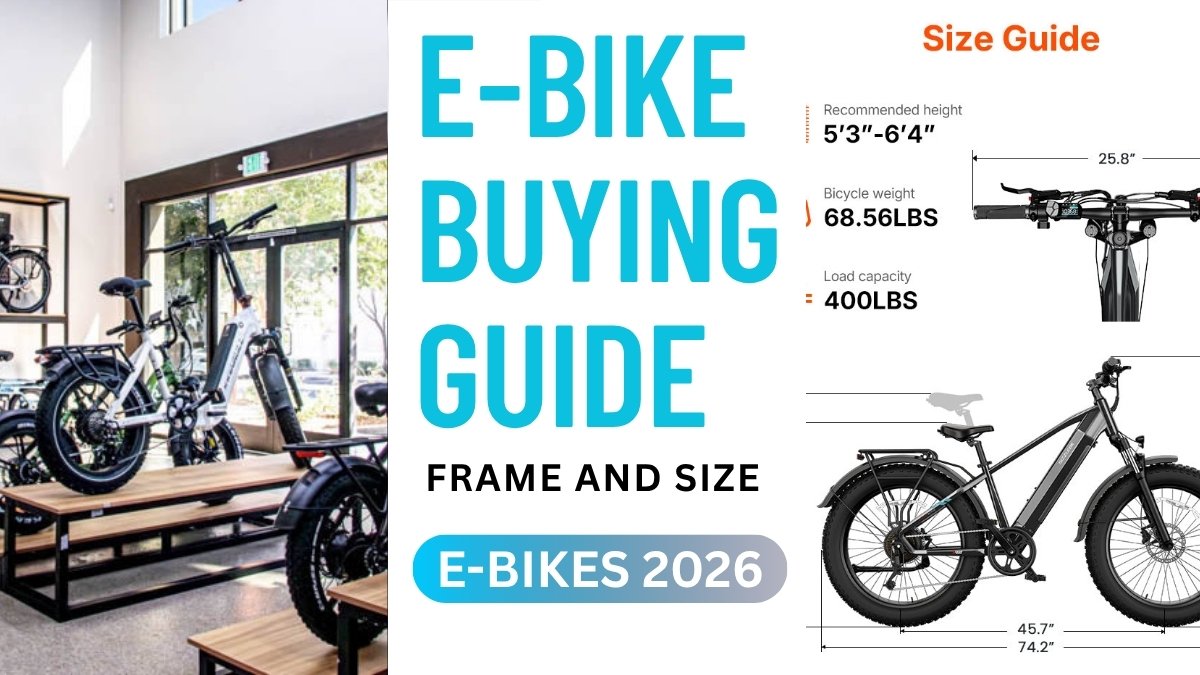
Selecting the correct frame style and frame size is the most crucial decision when buying an electric bike. Unlike traditional bicycles, e-bikes carry extra weight from the battery and motor, travel at higher average speeds, and are often used for longer continuous commutes. Riding an incorrectly sized or poorly matched e-bike frame leads to knee pain, lower back fatigue, hand numbness, difficult handling, and safety hazards during sudden stops.
This comprehensive guide breaks down the essential frame geometries, frame styles, sizing measurements, and fit adjustments needed to choose the perfect e-bike frame for your body and riding needs.
1. Frame & Sizing Selection Matrix
| Frame Characteristic | Key Options | Primary Advantage | Best Suited For |
| Frame Design Style | Step-Through vs. Step-Over | Easy mounting vs. Maximum frame rigidity | Casual commuters/limited mobility vs. Off-road/sport riders |
| Primary Sizing Metric | Rider Height & Inseam Length | Correct leg extension and standover clearance | All riders across all e-bike categories |
| Material Choice | Aluminum, Carbon Fiber, Steel | Lightweight stiffness vs. High vibration dampening | Daily commuters vs. Long-distance touring |
| Fit Adjustability | Stem angle, seat post, handlebar sweep | Customizes reach and riding posture | Fine-tuning comfort after purchase |
2. Choosing the Right E-Bike Frame Style
E-bike frames generally fall into two primary structural categories: Step-Through and Step-Over (Diamond) frames. Selecting between them depends on your physical mobility, cargo needs, and riding style.
1. Step-Through Frames
Step-through frames eliminate the high top tube, offering an open space between the seat and the handlebars.
Advantages
Extremely easy to mount and dismount. You simply step through the frame without swinging a leg high over the rear saddle—a crucial benefit if you have heavy rear panniers, a child seat, or limited hip and knee flexibility. They are ideal for urban commuting, stop-and-go city traffic, and casual utility riding.
Trade-Offs
Without a top crossbar, step-through frames experience slightly more frame flex under high torque or heavy loads. Manufacturers reinforce the lower down-tube to compensate, which can add a small amount of extra weight to the frame.
2. Step-Over (Diamond / High-Top-Tube) Frames
Step-over frames feature the traditional triangular diamond geometry with a high top tube connecting the headset to the seat tube.
Advantages
The double-triangle structure offers superior torsional stiffness and structural rigidity. This rigidity provides precise handling at high speeds (28 mph Class 3 e-bikes) and handles aggressive off-road impacts on electric mountain bikes (e-MTBs) without frame flex.
Trade-Offs
Mounting requires swinging your leg high over the saddle, which can be challenging if you have a large rear cargo basket attached or restricted physical mobility.
3. How to Determine Your Correct E-Bike Frame Size
Sizing an e-bike requires more than just looking at general “Small, Medium, or Large” labels, as sizing conventions vary significantly across different manufacturers. You must measure two key body dimensions: Rider Height and Standover Inseam.
1. General Height Chart Reference
While individual manufacturer size charts should always be consulted first, standard sizing roughly aligns with the following rider height ranges:
| E-Bike Frame Size | Rider Height (Feet & Inches) | Rider Height (Centimeters) |
| Extra Small (XS) | 4’10” – 5’2″ | 147 cm – 157 cm |
| Small (S) | 5’2″ – 5’6″ | 157 cm – 167 cm |
| Medium (M) | 5’6″ – 5’10” | 167 cm – 178 cm |
| Large (L) | 5’10” – 6’2″ | 178 cm – 188 cm |
| Extra Large (XL) | 6’2″ – 6’6″ | 188 cm – 198 cm |
2. Measure Your True Standover Inseam
Your pants inseam is not accurate enough for bike fitting. Measure your true anatomical inseam:
- Stand upright against a wall wearing your typical riding shoes, with your feet about 6 to 8 inches apart.
- Place a hardcover book between your legs and pull it firmly up against your crotch bone, mimicking the pressure of a bike saddle.
- Measure the distance from the top edge of the book straight down to the floor in inches or centimeters.
3. Evaluate Standover Clearance
Standover height is the clearance between your crotch and the frame’s top tube when standing flat-footed over the bike directly in front of the saddle.
Pavement & Commuting Bikes
Require at least 1 to 2 inches of clearance between your body and the top tube.
Off-Road & e-MTB Models
Require 2 to 4 inches of clearance to allow room to dismount safely on uneven, steep terrain without striking the top tube.
Note: Step-through frames offer virtually unlimited standover clearance, making inseam less critical for frame clearance, though still vital for saddle height adjustment.
4. Reach, Stack, and Riding Posture
Beyond basic frame height, the horizontal distance between the saddle and the handlebars determines your riding posture and upper-body comfort.
Upright Riding Position (Cruiser / City Commuter)
Short reach and high stack height keep your spine vertical, taking pressure off your wrists and lower back. This position maximizes visibility in city traffic but increases wind resistance.
Active / Moderate Position (Hybrid / Touring)
Leans your torso forward at roughly a 45-degree angle. This distributes body weight evenly between your sit bones and wrists, offering a balance of comfortable pedaling efficiency and aerodynamic drag reduction.
Aggressive / Athletic Position (e-MTB / Road E-Bike)
Longer reach and lower stack height place your torso low over the front wheel. This position optimizes front-wheel traction on steep off-road climbs and reduces drag at high cruising speeds.
Conclusion: Adjusting Your E-Bike Fit After Selection
Once you select the correct frame size, fine-tune your fit using built-in contact point adjustments:
- Saddle Height (Leg Extension): Sit on the saddle with your heel placed directly on the pedal at its lowest point (6 o’clock position). Your leg should be completely straight. When you switch to riding on the ball of your foot, this creates a proper 25- to 30-degree knee bend, maximizing pedaling efficiency and protecting your knee joints.
- Handlebar Reach Fine-Tuning: If the handlebars feel slightly too far away or too low, swap to an adjustable angle stem or install handlebars with a higher rise and back-sweep. This brings the grips closer to your body without needing a smaller frame size.
- Weight Capacities: E-bikes carry heavy frame loads. Always verify that the frame’s maximum weight rating (typically 250 lbs to 400 lbs) covers your total weight plus your expected cargo load.