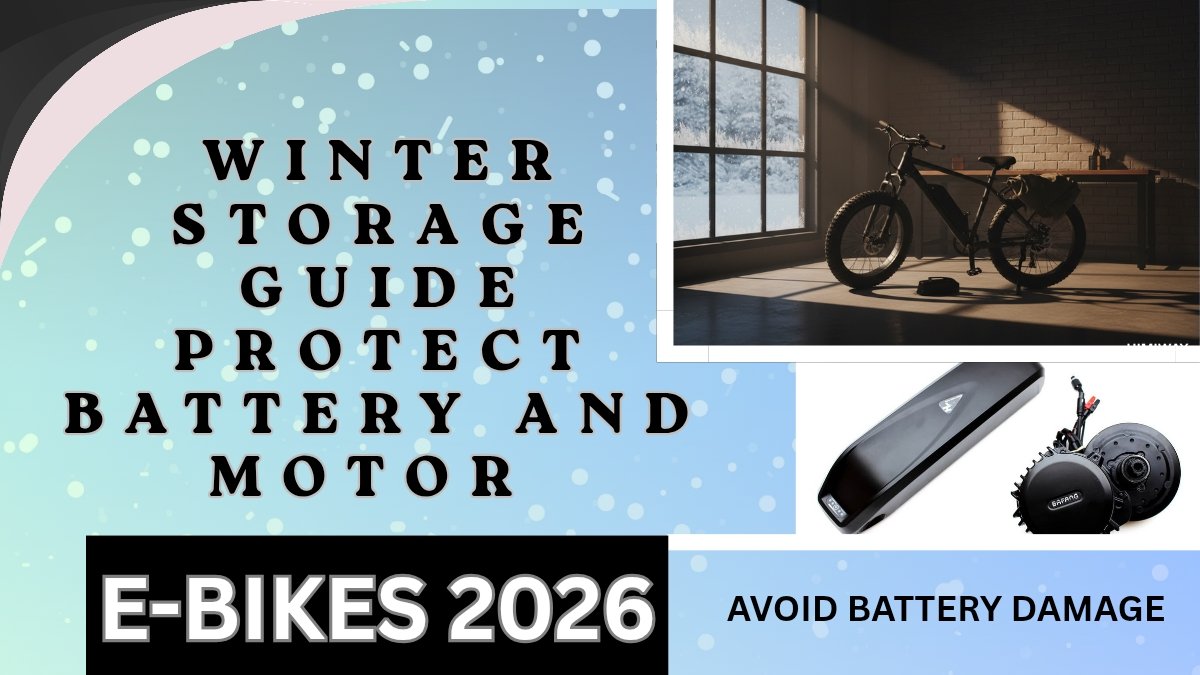
Winter weather poses unique challenges to electric bicycles. Sub-freezing temperatures, atmospheric moisture, road salt, and prolonged periods of inactivity can cause severe damage to your e-bike’s most critical components: the lithium-ion battery and the electric motor.
Without proper preparation, winter storage can lead to permanent battery capacity loss, electronic controller failure, structural rust, and seized motor bearings. Following a structured winterization routine ensures your e-bike remains protected through the cold months and ready to ride when spring arrives.
1. Winter Storage Protocol Overview
| E-Bike Component | Key Winter Storage Action | Danger to Avoid |
| Lithium-Ion Battery | Store indoors at 40%–60% charge at 50°F–70°F | Leaving at 0% or 100% charge in freezing temperatures |
| Electric Motor | Clean, dry, and protect casing seals | High-pressure washing or storing in damp environments |
| Drive System & Frame | Degrease, lubricate chain, and elevate tires | Storing dirty with road salt or on flat tires |
| Electronic Controls | Cover display/connectors; apply dielectric grease | Moisture buildup and terminal pin corrosion |
2. Protecting the Lithium-Ion Battery
The battery is the most valuable and environmentally sensitive component on your electric bike. Extreme cold alters the chemical behavior of lithium-ion cells, causing internal resistance to spike and cell chemistry to degrade permanently if stored incorrectly.
1. Maintain the Ideal State of Charge (40% to 60%)
Never store an e-bike battery fully charged (100%) or completely depleted (0%) over the winter.
High-Voltage Stress
Storing a battery at 100% charge places maximum stress on the internal cathode materials, accelerating permanent capacity loss over long periods of inactivity.
Deep Discharge Risk
All lithium-ion batteries experience slow self-discharge over time. If stored at 0%, the battery voltage can drop below the minimum safety threshold. When this occurs, the Battery Management System (BMS) enters an unrecoverable sleep state to prevent fire hazards, rendering the pack completely unusable.
The Sweet Spot
Aim for a charge level between 40% and 60% (typically 2 to 3 indicator LEDs out of 5) before placing the battery into seasonal storage.
2. Control the Storage Climate
Remove the Battery from the Bike
Even if your e-bike is stored in an unheated garage or shed, always detach the battery and bring it indoors.
Optimal Temperature Range
Store the battery in a dry, climate-controlled room between 50°F and 70°F (10°C to 20°C).
Never Charge in Freezing Temperatures
If you need to top off the battery during winter, ensure it has sat at room temperature for at least two hours before plugging in the charger. Charging a lithium battery below 32°F (0°C) causes permanent internal short-circuiting through lithium plating on the anode.
3. Monthly Maintenance Check
Set a recurring reminder to check the battery’s charge level once every 30 days. If self-discharge drops the battery capacity below 30%, plug it into its original factory charger for 20 to 30 minutes until it returns to the 50% mark.
3. Protecting the Electric Motor and Drive Electronics
Whether your e-bike features a mid-drive motor or a rear-hub motor, internal electrical components, planetary gears, and bearings must be shielded from moisture and corrosion during long storage periods.
1. Thoroughly Clean and Neutralize Road Salt
If you rode your e-bike on treated winter roads prior to storage, road salt and de-icing chemicals will linger on the frame and motor casing. Salt acts as a powerful corrosive agent that eats through aluminum housing, destroys bearing seals, and degrades rubber gaskets.
- Wipe Down the Casing: Use a damp microfiber cloth with mild soap to clean the motor body, bottom bracket area, and hub casing.
- Avoid Pressure Washers: Never use high-pressure water hoses near the motor or bottom bracket bearings. High pressure forces moisture past rubber lip seals, trapping water inside the motor gears where it causes rust and internal electrical short circuits.
2. Shield Exposed Electrical Terminals
With the battery removed, the metal terminal pins on the frame dock remain exposed to ambient humidity and condensation.
- Apply Dielectric Grease: Apply a thin layer of dielectric silicone grease directly to the electrical contact pins on both the frame mount and the battery connector. Dielectric grease repels moisture, prevents oxidization, and ensures strong electrical conductivity in the spring.
- Terminal Covers: Place a rubber terminal cap, neoprene battery-dock cover, or a clean plastic bag secured with a rubber band over the exposed battery terminal dock to keep dust and damp air out.
3. Protect the Display Console and Wiring
If your handlebar display console is removable, detach it and store it indoors alongside the battery. For non-removable displays and thumb throttles, wrap them with a soft cloth followed by a water-resistant cover to prevent condensation from creeping beneath the screen glass during ambient temperature swings.
4. Frame, Drivetrain, and Storage Environment Preparation
Preparing the rest of the mechanical assembly prevents flat spots on tires, seized chains, and frame corrosion over months of standing still.
1. Clean, Dry, and Lubricate the Drivetrain
Strip Old Grime
Clean the chain, cassette cogs, and front chainring using a bike-specific degreaser and a stiff brush to remove built-up road grit and moisture.
Apply Protective Lube
Dry the chain thoroughly with a towel, then apply a generous coat of wet-weather chain lubricant. Wet lube leaves a thick, protective oil film that seals out ambient air moisture and prevents the chain links from rusting solid over the winter.
2. Prevent Tire Flat-Spotting
Leaving a heavy 50-to-75-pound e-bike sitting on under-inflated tires in one position for months damages tire sidewalls and creates permanent flat spots in the rubber.
- Inflate to Recommended PSI: Pump both tires up to the maximum recommended PSI listed on the tire sidewall before storing.
- Elevate the Bike: Ideally, hang the e-bike from a ceiling rack or mount it on a sturdy repair stand to keep the weight off the tires. If floor storage is your only option, rotate the wheels a quarter-turn every few weeks to redistribute the standing weight.
3. Select the Right Storage Location
Choose a clean, dry, covered environment free from extreme humidity fluctuations.
- Indoor Storage (Best): A climate-controlled basement, spare room, or insulated garage offers maximum protection against rust and component degradation.
- Shed or Unheated Space (Acceptable with Precautions): If you must store the bike frame in an unheated space, ensure it is completely dry before covering it. Use a breathable fabric bike cover rather than a plastic tarp; plastic traps rising ground moisture beneath the cover, creating a humid microclimate that accelerates frame and bolt rusting.
Conclusion: Spring Recommissioning Checklist
When winter ends and you are ready to hit the trails or roads again, follow this quick checklist before your first ride:
- Reinstall the fully rested, room-temperature battery and verify power delivery on the display.
- Check tire pressures and inflate them back to optimal riding levels.
- Inspect brake rotors and pads for surface rust; perform a few low-speed test stops to clear minor surface oxidation.
- Wipe any excess protective lube off the chain with a dry rag.
- Check that all cable connections, wheel axles, and motor mounting bolts are torqued securely.