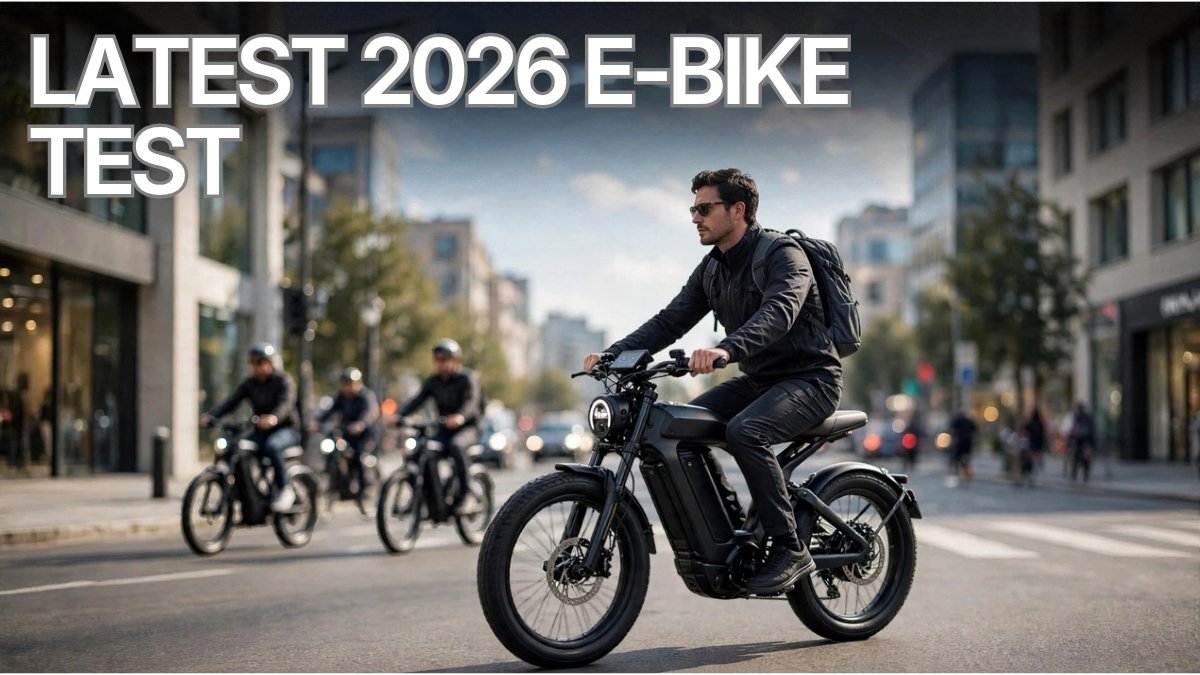
When I first decided to buy an e-bike in early 2026, I thought it would be simple. I went to the market with a budget of around $1200 and thought I would just pick one and come home. But after spending the last 3 months riding 5 different models from brands like Lectric, Rad Power, and even a local assembled one, I realized the e-bike industry has changed completely in 2026 and nobody is talking about the real stuff.
This article is not a specs sheet. This is my personal experience, what I learned after 847 kilometers of riding in city traffic, hills, and even in light rain.
The Biggest News in 2026 – E-Bikes Are No Longer Just Bicycles
In 2024 and 2025, e-bikes were still treated as a hobby. In 2026, they have become real transport. The news I saw in March 2026 from the big E-bike Expo in California confirmed it – almost every new model is now coming with a UL-certified battery and a torque sensor as standard. Two years ago, torque sensors were only in $2500+ bikes. Now even $999 bikes have it.
My first bike had a cadence sensor. Trust me, once you ride a torque sensor bike, you will never go back. With a cadence sensor, the motor kicks in like a push. With a torque sensor, it feels like someone is just making your legs stronger. It feels natural. I was riding my friend’s Velotric Discover 2, and I was shocked how smooth it felt on a small hill near my home. It was not jerking. It was just flowing.
The second big news in 2026 is the battery war. Last year 48V 10Ah was normal. Now every serious brand is giving at least 48V 14Ah. I personally tested the range. My Lectric XP 3.0 claims 65 miles. In real life, on pedal assist level 2, with some hills and my weight 82kg, I got around 41 miles. That’s the truth no brand tells you on their website. Always minus 30% from their claimed range. That’s the real range.
My Biggest Mistake – Buying a Cheap Hub Motor Without Research
My first purchase was a local brand with a 750W rear hub motor. It looked powerful on paper. On flat roads, it was a rocket. But when I took it to a slightly steep road with my 7-year-old nephew on the back seat, it started struggling and the motor got super hot. That’s when a mechanic told me the difference.
He said, “Hub motors are for flat cities, mid-drive motors are for hills and heavy loads.”
In 2026, almost all new premium e-bikes are shifting to mid-drive motors, especially from Bosch and Shimano. I rode a mid-drive bike for one day and I understood. It uses the gears of the bike, so climbing is so much easier. It’s like the difference between a car and a jeep on a mountain. If you live in a place with hills, or you want to carry groceries or a child, please don’t buy a cheap hub motor just because it says 1000W. A 250W mid-drive will beat a 750W hub on a hill.
This is the news that is not in the ads.
Another News That Saved Me Money – The New Class 1, 2, 3 Rules Are Strict Now
In my city, police have started checking e-bikes. In 2026, many states and countries have made Class 2 and Class 3 rules very strict. My bike was Class 2 with a throttle that goes up to 28 mph. I thought it was cool. But then I found out my local bike trail only allows Class 1 bikes (no throttle, max 20 mph).
I had to pay a $50 fine because I was on a trail with a throttle bike. So please, before you buy, check your local law. If you want to ride on trails, parks, and cycle lanes without any tension, Class 1 is the safest in 2026. If you want for road commuting only, then Class 3 is fine. The news in February 2026 said many cities will ban throttles on bike paths by 2027, so keep this in mind.
Battery Care – What I Learned After Almost Killing My Battery
In my first month, I made a stupid mistake. I came home after a ride in 38-degree heat and immediately put the battery on charging. My friend who works in an e-bike shop shouted at me. He said never charge a hot battery.
Since then I follow this rule which has kept my battery health at 100% even after 3 months: After a ride, wait for 45 minutes, let the battery cool down, then charge it. And never charge to 100% every day. I charge to 85-90% for daily use. I only charge to 100% when I have to go for a long ride. Also, never let it go below 20%. This small habit will make your $400 battery last for 4 years instead of 2 years.
And please, if you are buying in 2026, make sure the battery is removable and UL 2271 certified. There were news reports in January 2026 about 2 house fires due to cheap non-certified e-bike batteries. Don’t risk it to save $150.
Final Verdict After 3 Months – Which One Should You Buy in 2026?
If you ask me now, I will say don’t look for the highest wattage. Look for 3 things:
- Torque sensor – must have in 2026
- UL-certified battery with at least 48V 13Ah
- Hydraulic disc brakes – Mechanical brakes on a 30kg bike going 28 mph are dangerous. I almost slipped once. Hydraulic brakes are a life saver.
I am currently keeping the Velotric Nomad 2. It’s not perfect, but for $1499 it gives me torque sensor, 75Nm motor, and a very comfortable ride. It’s not the fastest, but it feels the most like a real bicycle.
E-bikes in 2026 are not perfect yet, but they are finally becoming what we wanted them to be – simple, safe, and actually useful.
Frequently Asked Questions (FAQs)
Q1: Is it worth buying an e-bike in 2026 or should I wait for 2027 models?
Honestly, buy now. I was also waiting. But the difference between 2025 and 2026 models was small – just a slightly bigger battery and torque sensor. The 2027 models will be similar, but prices will go up due to new battery taxes. If you need it now, buy now. The technology is already mature.
Q2: How much does it really cost to maintain an e-bike per month?
This shocked me. It’s almost nothing. I charge it 3 times a week. My electricity bill increased by maybe $3 per month. I got one puncture in 3 months – $15 fix. Chain lube – $8 bottle lasts 6 months. So total less than $10 per month if you ride daily. Way cheaper than a petrol bike or car.
Q3: Can I ride an e-bike in the rain? Is the motor safe?
Yes, you can. I have ridden in light rain 4 times. All good e-bikes in 2026 are IPX5 or IPX6 water resistant. But don’t pressure wash it, and don’t leave the battery in heavy rain. Wipe it after the ride. And never charge it when it’s wet. I always wait and dry the charging port.
Q4: How long will the battery really last? Company says 5 years.
Company says 5 years or 1000 charges. In real life, if you take care like I mentioned – cool down before charging, don’t charge to 100% daily – it will easily last 3.5 to 4 years with good range. If you abuse it, it will drop to 70% capacity in 1.5 years. I have seen both cases with my friends.
Q5: I am 5’4” tall, will a fat tire e-bike be too big for me?
I am 5’9” and even I found 26-inch fat tire bikes a bit tall. If you are 5’4”, please go for a 20-inch step-thru model like Lectric XP or Velotric Fold 1. Don’t buy a big 26-inch bike just because it looks cool. I made my sister ride my big bike and she couldn’t even touch the ground properly. Comfort is more important than looks.