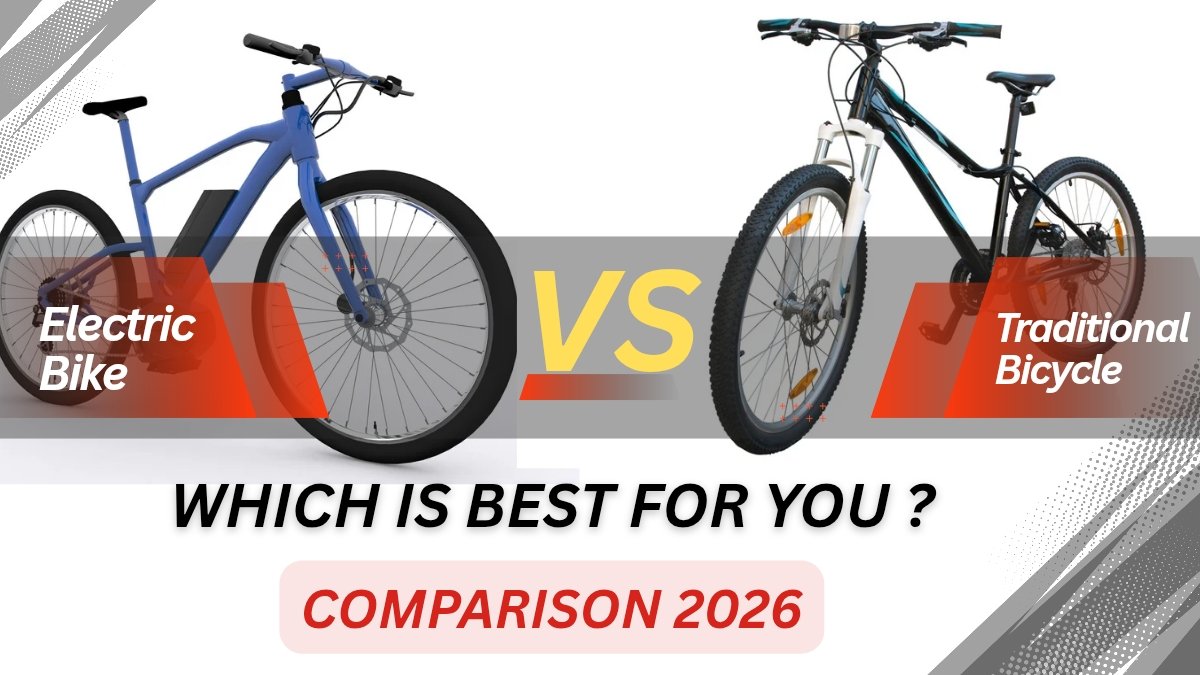
The debate between electric bikes (e-bikes) and traditional bicycles comes down to evaluating two distinct philosophies of personal transportation. Traditional bicycles offer pure human-powered simplicity, lightweight agility, low long-term ownership costs, and uncompromised athletic conditioning. Electric bikes, equipped with integrated motors and rechargeable batteries, reimagine cycling by flattening steep hills, extending commuting range, mitigating fatigue, and serving as genuine car replacements for daily utility.
Choosing between the two depends on your primary fitness goals, daily commuting distance, local topography, health considerations, and overall budget. This comprehensive breakdown compares both options across key mechanical, physical, and financial factors to help you determine which bicycle type best aligns with your lifestyle.
1. Core Comparison Matrix
| Evaluating Metric | Traditional Bicycle | Electric Bike (E-Bike) |
| Primary Power Source | 100% Human Pedaling | Human Pedaling + Motor Assistance |
| Top Assisted Speed | Dependent strictly on rider effort | 20 mph to 28 mph (assisted) |
| Hill Climbing Ability | Requires significant physical exertion | Smooth and effortless via motor torque |
| Average Weight | 18 lbs – 30 lbs (8 kg – 14 kg) | 40 lbs – 75 lbs (18 kg – 34 kg) |
| Maintenance Complexity | Simple mechanical systems | Mechanical drivetrain + electrical systems |
| Initial Cost Range | Budget-friendly ($300 – $1,500) | Higher investment ($1,000 – $4,000+) |
| Primary Advantage | Simplicity, low weight, pure cardio | Range extension, speed, hill flattening |
2. Physical Health, Fitness, and Effort
One of the most common misconceptions is that e-bikes offer “no exercise” compared to traditional bikes. The reality of physical exertion differs significantly based on how both bikes are used.
The Traditional Bicycle Fitness Profile
Maximum Cardiovascular Work
Traditional cycling forces your cardiovascular system and leg muscles to adapt to varying terrain. On steep inclines, you must generate peak wattage output, forcing your heart rate into high-intensity training zones.
Caloric Burn per Hour
Because every foot of forward momentum relies entirely on metabolic energy, traditional bicycles burn higher calories per minute under intense riding conditions compared to eco-mode e-biking.
The Electric Bike Fitness Profile
Adjustable Workouts
E-bikes feature multiple pedal-assist levels (such as Eco, Tour, Sport, and Turbo). In lower assist modes, you still pedal continuously, providing an effective low-impact zone-2 aerobic workout without overstraining joints.
Frequency and Duration
Multiple physiological studies show that e-bike owners tend to ride more frequently and for longer distances than traditional bicycle owners. The reduction in physical intimidation (fear of steep hills or exhaustion) encourages riders to cycle more days per week, leading to high cumulative health benefits over time.
3. Commuting Efficiency, Range, and Terrain
When evaluated strictly as daily transportation, e-bikes and traditional bikes offer vastly different commuting profiles.
Overcoming Topography and Headwinds
The Hill-Climbing Barrier
Steep hills and heavy headwinds are the primary reasons traditional bikes stay parked in garages. Climbing an 8% incline on a traditional bike requires immense effort, often resulting in heavy sweating that necessitates a shower upon reaching your destination.
Flattening the Map
E-bikes neutralize geographical obstacles. A mid-drive or high-torque hub motor applies instant torque, allowing you to breeze up steep hills at 15–20 mph with minimal exertion. You arrive at work or social gatherings clean, calm, and without needing a change of clothes.
Distance and Commute Speeds
Traditional cyclists generally average 10 to 14 mph on city streets, with speed dropping noticeably on ascents. E-bikes easily maintain average speeds of 20 to 28 mph depending on their class qualification. This higher average speed makes 10-to-20-mile daily commutes feasible, allowing riders to bypass traffic gridlock while maintaining predictable travel times.
4. Practicality, Weight, and Storage
While e-bikes win on speed and terrain management, traditional bikes hold a major structural advantage in weight, portability, and simplicity.
Bike Weight and Maneuverability
Traditional Bikes
Weighing between 18 and 30 pounds, a traditional bicycle is easy to carry up apartment staircases, lift onto public bus racks, or hang on wall-mounted storage hooks inside a home.
E-Bikes
Equipped with battery packs (6–10 lbs) and hub or mid-drive motors (7–12 lbs), e-bikes weigh anywhere from 45 to over 70 pounds. Carrying a heavy e-bike up several flights of stairs or lifting it onto a high car roof rack requires substantial physical effort.
Transporting Cargo and Passengers
The heavy-duty frame construction and electric assistance of utility/cargo e-bikes make them exceptional tools for hauling groceries, heavy gear, or carrying children in rear seats. Carrying 50+ pounds of cargo on a traditional bike requires exceptional leg power, whereas an e-bike motor absorbs the added cargo weight easily.
5. Cost of Ownership, Maintenance, and Longevity
Financial considerations extend beyond the initial sticker price at the bike shop.
Upfront Purchase Price
Traditional Bikes
A reliable, high-quality traditional commuter or road bike costs between $400 and $1,200. Premium carbon fiber models cost more, but functional transportation options are extremely accessible.
E-Bikes
Entry-level e-bikes begin around $1,000, with reliable, mid-tier models ranging from $1,800 to $3,500. High-end cargo or mountain e-bikes can easily exceed $5,000.
Maintenance and Replacement Costs
Traditional Maintenance
Consists of basic mechanical upkeep—replacing brake pads, lubricating the chain, fixing flat tires, and adjusting derailleur cables. Annual maintenance costs are minimal and can often be performed at home with basic tools.
E-Bike Maintenance
In addition to standard mechanical wear (which occurs faster on chains, tires, and brake pads due to higher speeds and weight), e-bikes involve complex electrical diagnostics, motor controllers, and battery packs. E-bike lithium-ion batteries naturally degrade over 3 to 5 years, with replacement battery packs costing between $400 and $800.
Conclusion: Which Should You Buy?
Buy a Traditional Bicycle If:
- Your primary goals are pure athletic fitness, maximum calorie burn, and sport cycling.
- You live in a flat area or ride mostly on paved, dedicated recreational paths.
- You need to carry your bike up stairs regularly or store it in a small indoor space.
- You want a low-budget, ultra-reliable vehicle with near-zero long-term maintenance overhead.
Buy an Electric Bike If:
- You want to replace car trips for daily commuting, grocery shopping, or running errands.
- Your local route features steep hills, strong headwinds, or long distances.
- You want to commute without sweating through your work clothes.
- You are recovering from injury, managing joint stiffness, or want an accessible way to build physical stamina comfortably.