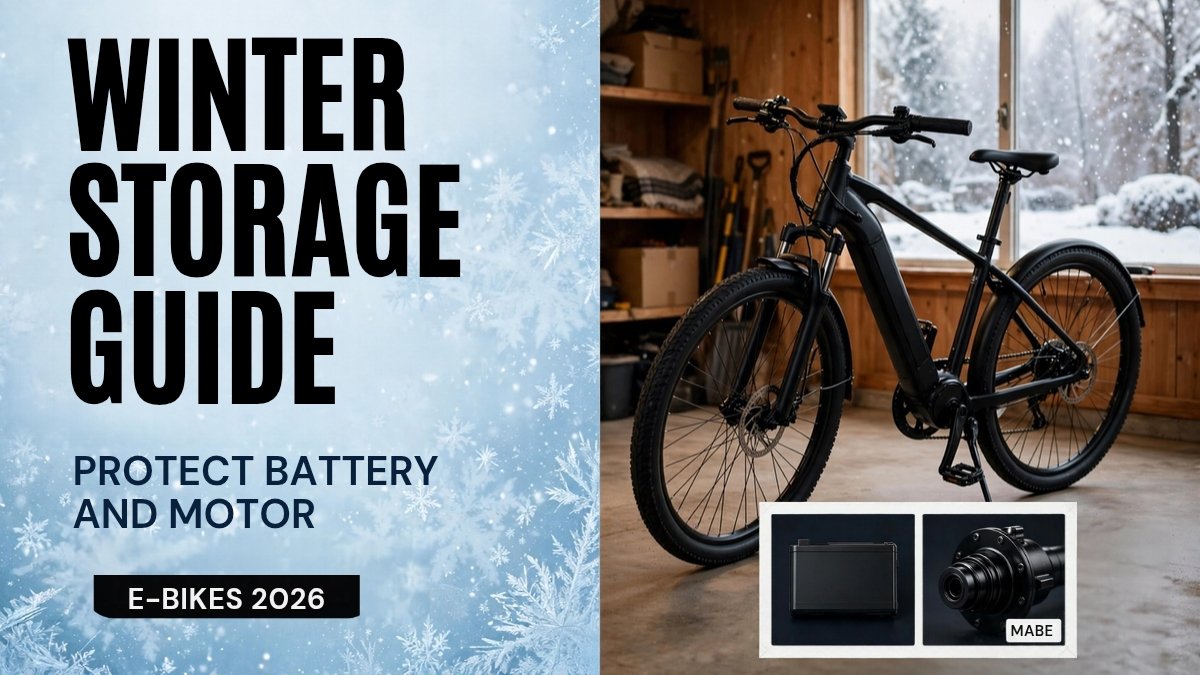
Cold winter weather presents unique challenges for electric bicycles. Sub-zero temperatures, freezing moisture, road salt, and long periods of standing idle can severely damage your e-bike’s most critical components—specifically the lithium-ion battery pack and electric motor.
Without proper seasonal preparation, winter storage can lead to permanent battery capacity loss, fried motor controllers, frame rust, and seized bearings. Following a structured winterization routine ensures your e-bike stays completely protected during the off-season and ready to ride when warm weather returns.
Last winter, I made the mistake of leaving my e-bike in an unheated garage for two months with a fully drained battery. When spring came, the battery wouldn’t charge at all, and I had to spend a lot of money to replace it. I learned the hard way that cold weather destroys lithium batteries if they aren’t stored properly. Now, I always bring my battery indoors, keep it charged around 50% to 60%, and wipe down the motor before storing the bike. Doing this simple winter routine saved my battery and kept my motor running perfectly every year.
Winter Storage Summary & Core Protocol
| E-Bike Component | Recommended Action | Major Risk to Avoid |
| Lithium-Ion Battery | Keep indoors at 40%–60% charge (50°F–70°F) | Storing at 0% or 100% charge in freezing cold |
| Electric Motor | Clean, dry, and protect casing seals | Power washing or leaving in damp areas |
| Drivetrain & Frame | Degrease, apply wet lube, and raise tires | Storing dirty with road salt or flat tires |
| Electronic Controls | Cover screen/terminals; apply dielectric grease | Moisture build-up and pin corrosion |
1. Safeguarding the Lithium-Ion Battery
The battery is the most expensive and sensitive part of your electric bicycle. Freezing temperatures alter the internal chemical reaction of lithium-ion cells, raising internal resistance and causing irreversible degradation if stored improperly.
Maintain the Sweet Spot (40% to 60% Charge)
Never store your battery completely full (100%) or entirely drained (0%) for extended periods.
- High-Voltage Stress: Keeping a battery at maximum charge places continuous strain on internal cathode materials, accelerating capacity loss over months of inactivity.
- Deep Discharge Hazard: Lithium batteries slowly self-discharge over time. If stored at 0%, the battery voltage can drop below the safety threshold. When this occurs, the internal Battery Management System (BMS) enters a permanent sleep lock to prevent fire risks, rendering the battery unusable.
- Optimal Level: Aim to keep the charge indicator between 40% and 60% (roughly 2 to 3 indicator lights out of 5) before storing it away.How to Inspect and Replace Worn-Out E-Bike Brake Pads
Climate Control and Charging Rules
- Bring the Battery Indoors: Even if your bike stays in an unheated garage or outdoor shed, always detach the battery and store it inside your home.
- Ideal Temperature Range: Keep the pack in a dry, climate-controlled space between 50°F and 70°F (10°C to 20°C).
- Avoid Freezing Charges: If you top up the battery during winter, let it sit at room temperature for at least two hours first. Plugging in a frozen battery below 32°F (0°C) causes internal short-circuiting due to lithium plating.
Monthly Health Check
Set a monthly calendar reminder to verify the battery level. If self-discharge drops the battery capacity under 30%, plug it into its original factory charger for 20 to 30 minutes until it reaches around 50%.
2. Protecting the Motor and Electronics
Whether your e-bike uses a mid-drive or rear hub motor, internal electronics, planetary gears, and bearings must be shielded from condensation and corrosion.
Neutralize De-Icing Salts
If you ride on salted winter roads before storage, road chemicals will remain on your frame and motor casing. Salt acts as a heavy corrosive agent that eats aluminum housing and ruins rubber gaskets.
- Clean the Casing: Wipe down the motor housing, bottom bracket area, and hub casing with a damp microfiber cloth and mild soap.
- Skip Pressure Washers: Never blast high-pressure water near the motor or bearings. High pressure forces water past rubber seals, trapping moisture inside where it causes internal rust and short circuits.
Shield Electrical Terminals
Removing the battery leaves metal pin contacts exposed to damp air and condensation.
- Apply Dielectric Grease: Spread a thin coating of dielectric silicone grease directly onto the contact pins on both the frame mount and battery dock. This repels moisture and prevents pin oxidation.
- Cover the Terminals: Place a rubber terminal cap, neoprene cover, or clean plastic bag secured with a rubber band over the dock to keep out moisture and dust.
Protect the Display Unit
If your handlebar screen is removable, store it indoors with the battery. For built-in displays and throttles, wrap them in a soft cloth followed by a water-resistant cover to prevent condensation build-up under the glass during temperature changes.
My Personal Tip on Winter Prep
From my experience, the biggest mistake riders make is leaving the battery attached to the bike in a cold garage. Even a few weeks in freezing temperatures can noticeably degrade your total range come spring. Always bring the battery indoors, and if you live in a humid area, wrap the frame dock in a simple plastic cover with dielectric grease—it saves you from frustrating electrical connection issues later.
3. Frame, Drivetrain, and Storage Setup
Preparing the mechanical parts prevents flat spots on tires, frozen chain links, and frame rust over months of standing still.
Clean and Protect the Drivetrain
- Remove Dirt and Grit: Clean the chain, cassette, and chainring with a bike degreaser and brush to strip away old road grime.
- Apply Protective Lube: Dry the chain completely, then apply a generous layer of wet-weather chain lubricant. Wet lube forms a durable oil coating that seals out air moisture and prevents rust.
Prevent Tire Flat-Spotting
Leaving a heavy 50-to-75-pound e-bike sitting on soft tires for months can cause sidewall cracks and permanent rubber flat spots.
- Pump to Maximum PSI: Inflate both tires to the maximum recommended PSI stated on the sidewall before storage.
- Elevate the Bike: Ideally, hang the bike from a wall rack or ceiling hook to keep weight off the tires. If storing on the floor, rotate the wheels a quarter-turn every few weeks to shift the weight.
Choose the Right Environment
- Indoor Storage (Best): A climate-controlled room, basement, or insulated garage offers maximum protection against rust.
- Shed Storage (Acceptable): If storing in an unheated shed, make sure the bike is completely dry before covering it. Use a breathable fabric cover instead of a plastic tarp, as plastic traps rising ground moisture beneath it and causes rust.
Spring Recommissioning Checklist
When winter ends, run through this quick checklist before your first ride:
- Reinstall the fully rested, room-temperature battery and check the display screen.
- Verify tire pressures and inflate them back to optimal riding levels.
- Inspect brake rotors for surface rust and do a few low-speed test stops to clean off oxidation.
- Wipe away any excess protective lube from the chain with a dry rag.
- Double-check that all cables, wheel axles, and motor mounting bolts are properly tightened.
Frequently Asked Questions
What is the biggest mistake when storing an e-bike in winter?
I made this exact mistake last winter. I left my e-bike in an unheated garage for two months with a fully drained battery. When spring came, the battery wouldn’t charge at all, and I had to spend a lot of money to replace it. I learned the hard way that cold weather destroys lithium batteries if they aren’t stored properly.
How should I store my e-bike battery during winter?
Now I always bring my battery indoors and keep it charged around 50% to 60%. What I do is store it at room temperature, around 50°F to 70°F. This simple winter routine saved my battery and kept my motor running perfectly. Never store it at 0% or 100% charge in freezing cold.
Can cold weather damage my e-bike’s motor and other parts?
Yes, without proper seasonal preparation, winter storage can lead to permanent battery capacity loss, fried motor controllers, frame rust, and seized bearings. Cold winter weather with sub-zero temperatures, freezing moisture, and road salt can severely damage your e-bike’s most critical components. I now always wipe down the motor before storing the bike every year.