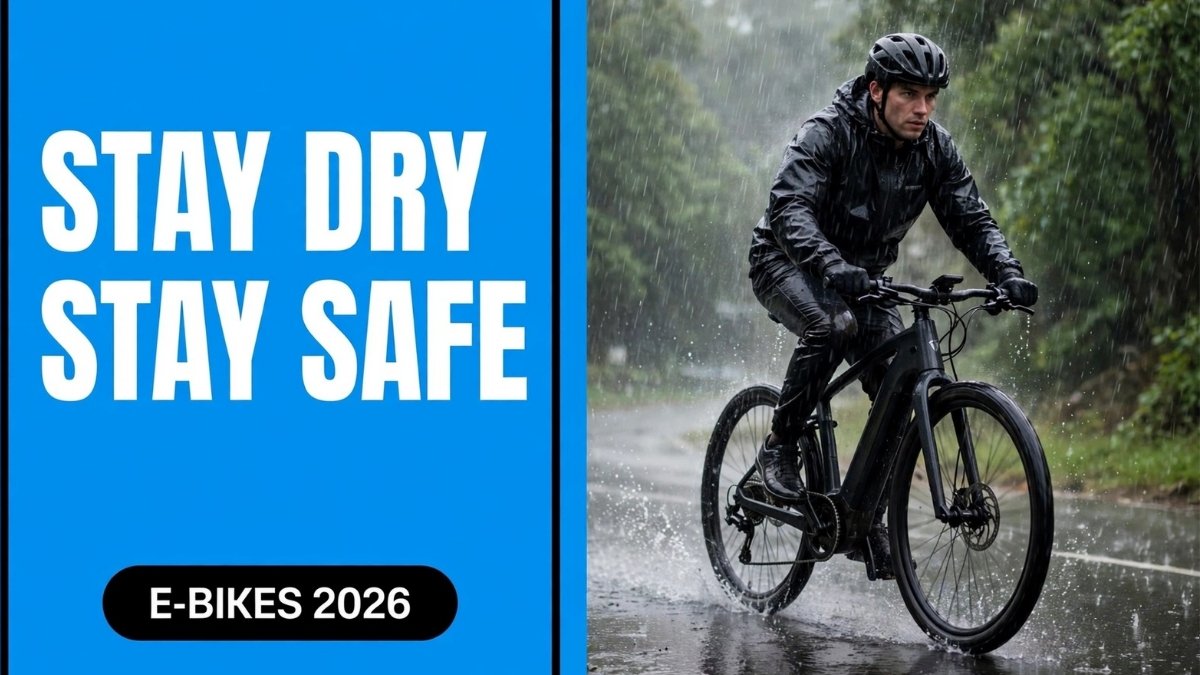
Can you ride an e-bike in rain? Yes, you can.
But rain changes everything. Road becomes slippery, brakes become weak, and water can damage battery and motor.
If you ride in rain like you ride in dry weather, you will slip. Most rain accidents happen on white painted lines, manhole covers, and on sudden braking.
In this guide, I will show you how to ride safely in rain, how to protect your battery from water, and what to do after a wet ride so your bike does not rust.
Quick Rain Safety Matrix
| Category | What To Do | Benefit |
| Braking | Brake early, pump levers gently | Stops wheel lockup and skidding |
| Electrical Care | Check IP65+ rating, use dielectric grease | Saves battery, controller, display from water |
| Tyre Setup | Lower tyre pressure by 5-10 PSI | More grip on wet road |
| Visibility | Flashing lights + neon jacket | Drivers can see you in rain |
| Post-Ride Care | Wipe bike, dry battery contacts | Stops rust and short circuit |
5 Safety Rules For Riding In Rain
1. Brake Early And Brake Gently – Most Important Rule
In rain, water goes between brake pad and disc. Brakes become weak for first 1-2 seconds.
- Start braking twice as early as dry road. If you normally brake 20 meters before signal, in rain brake 40 meters before.
- Do not press brake hard at once. Feather your brakes – press gently, release, press gently, release. This clears water from disc.
- Choose hydraulic disc brakes for rain. Rim brakes become almost useless in rain because rim is wet and dirty.
Hard braking in rain = wheel locks = you slide and fall.
2. Slow Down And Do Not Lean In Turns
Wet road has 50% less grip than dry road. These 4 things become like ice in rain:
- White painted road lines
- Metal manhole covers
- Railway tracks
- Wet leaves
Rules to follow:
- Do not lean bike heavily in turn. Keep bike upright, turn slowly.
- Do not accelerate suddenly. In Turbo mode, rear wheel will spin on wet road. Switch to Eco / Low assist in rain.
- Cross railway tracks and painted lines straight, not at an angle. If you cross at angle, tyre will slip.
- Speed in rain should be 15-20 km/h in city, not 35-40 km/h.
3. Lower Tyre Pressure By 5-10 PSI For More Grip
Over-inflated hard tyre touches road on a very small area. In rain, it slips easily.
If your normal pressure is 50 PSI, in rain keep it at 40-45 PSI. Softer tyre spreads on road, grip increases.
Do not make it too soft. Too soft = puncture risk. Just 5-10 PSI less is enough.
4. Never Ride Through Deep Puddles
Deep puddle looks like just water, but inside it can be:
- Deep pothole
- Sharp glass or nail
- Open drain
And for e-bike, deep water is more dangerous. Water can go inside motor, battery mount, and controller. Even if your bike is water-resistant, it is not waterproof.
Rule: If you cannot see the bottom of puddle, do not go through it. Go around it slowly.
5. Be Visible – Drivers Cannot See You In Rain
In heavy rain, car windows get foggy, mirrors get water drops. Driver cannot see you clearly.
What to do:
- Turn ON front and rear lights in flashing mode, even in daytime.
- Wear neon yellow, orange, or neon rain jacket with reflective strips on arms and shoulders.
- Use bell on blind turns.
Dark black jacket in rain = invisible. Neon jacket = driver sees you from 100 meters.
How To Waterproof Your E-Bike? IP Rating Explained
No e-bike is 100% waterproof. All e-bikes are water-resistant. The level is shown by IP rating.
- IP65: Safe in rain and water spray from any side. This is minimum you need.
- IP67: Safe even if dipped in water for a short time. Best rating.
- Below IP54: Do not ride in medium or heavy rain. It will get damaged.
Check IP rating of your battery, motor, and display before buying. If company does not mention IP rating, assume it is low.
3 Things To Protect Battery And Electronics In Rain
1. Neoprene Cover
Buy a neoprene cover for battery and display. It costs very little. It stops direct rain from hitting battery and keeps battery warm. Cold rain also reduces battery range.
2. Dielectric Silicone Grease
Put a small drop of dielectric grease on battery terminals, display plugs, and all electric connectors. It makes a waterproof layer and stops rust on pins. This is the best Rs. 500 protection for your e-bike.
3. Silicone Tape On Wires
Wrap exposed wire joints and controller box edges with self-fusing silicone tape. Water cannot go inside joints.
4. Full Fenders – Must Have For Rain
Many people remove fenders for looks. In rain, fenders are life-savers.
- Rear fender stops mud spray on battery, controller, and your back.
- Front fender with mudflap stops water spraying on your face, feet, and motor.
If your e-bike has no fenders, install them before monsoon season.
After Rain Ride: 5-Minute Drying Routine – Do Not Skip This
What you do AFTER rain ride is more important than during ride. If you leave a wet bike in garage, it will rust in 2-3 weeks and battery contacts will get damaged.
Do this as soon as you reach home:
- Step 1 – Power OFF and Remove Battery: Turn off display, remove battery from frame. Do not charge a wet battery.
- Step 2 – Dry The Bike: Wipe frame, handlebar, display, and battery housing with a dry microfiber cloth.
- Step 3 – Dry Battery Contacts: Check battery terminal points on frame. If wet, dry with a clean towel. You can use a hair dryer on low heat from far distance. Never use high heat.
- Step 4 – Clean And Oil Chain: Rain washes away chain oil and puts sand on chain. Wipe chain with dry rag, then apply wet-weather chain oil. Otherwise chain will rust overnight.
- Step 5 – Store Indoors: Keep bike and battery in a dry room at 15°C to 25°C. Do not leave bike outside in rain overnight.
This 5-minute routine will double your bike’s life.
What NOT To Do In Rain
- Do not use high-pressure water jet to wash e-bike. It pushes water inside motor and battery.
- Do not charge battery while it is wet.
- Do not ride in Turbo mode in rain.
- Do not brake hard on painted lines.
- Do not park bike in rain for whole night.
Frequently Asked Questions (FAQs)
Is it safe to ride an e-bike in the rain?
Yes, it is safe if you ride carefully. Ride in low assist, slow down, brake early, and avoid painted lines and deep puddles. Most e-bikes with IP65 rating are made for light to medium rain. Do not ride in heavy storm, thunder, or flooded roads.
How do I protect my e-bike’s battery and electronics from water?
Check IP rating – it should be IP65 or higher. Use a neoprene battery cover, apply dielectric grease on connectors, and dry battery contacts after every wet ride. Never use pressure washer on e-bike, and never charge a wet battery.
What changes when braking on wet roads with an e-bike?
Wet roads reduce grip a lot. Braking late is very dangerous in rain. Always brake early and pump levers gently instead of hard braking. This prevents wheel lockup, skidding, and falling. On wet road, slow and gentle is much safer.
Can rain damage my e-bike motor?
Light rain will not damage a good motor with IP65 rating. But deep water, pressure washing, and riding through flooded roads can damage motor. Avoid deep puddles and dry the bike after rain.
Should I lower tyre pressure in rain?
Yes. Lower pressure by 5-10 PSI. It increases tyre contact with road and gives more grip on wet asphalt. Do not make it too soft.
What chain oil should I use in rainy season?
Use wet-weather chain lube, not dry lube. Dry lube washes off in rain in 10 minutes. Wet lube sticks to chain even in rain and stops rust.
Final Verdict
If you tell me your city – does it rain heavily or just light drizzle – and your e-bike model, I will tell you if your bike is safe for rain and what waterproofing you need.