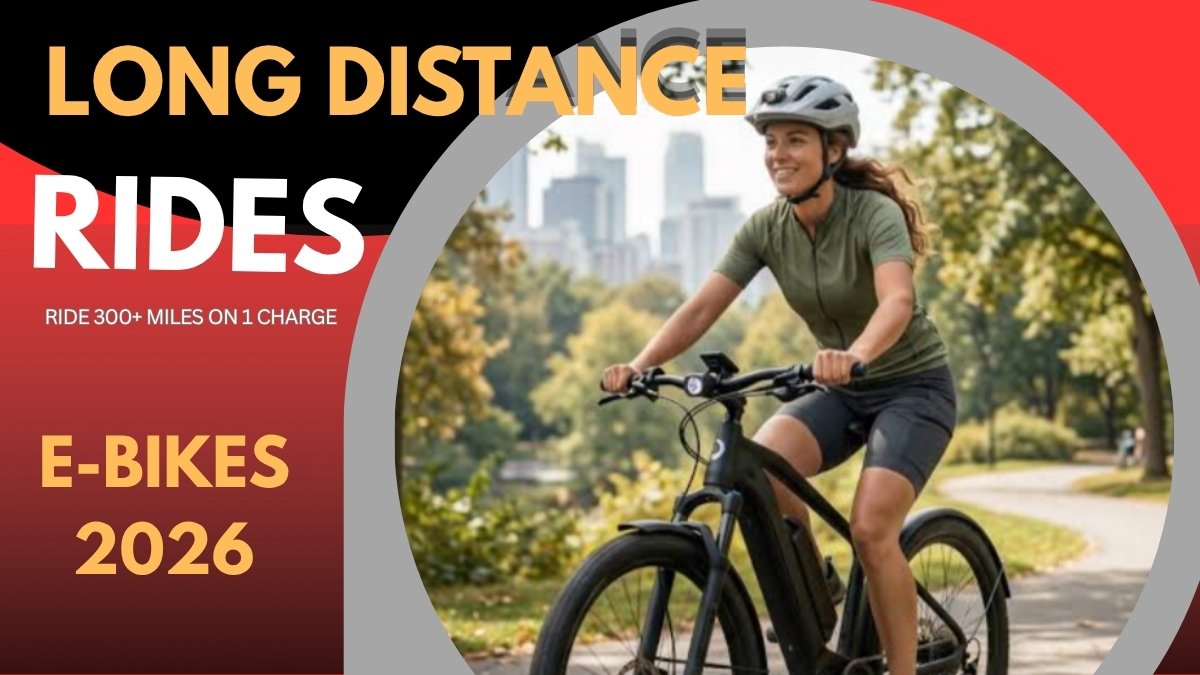
Long-distance electric bike riding requires an approach distinct from daily urban commuting. On century rides (100+ miles), multi-day touring trips, or remote bikepacking journeys, range anxiety, thermal management, frame geometry, and structural battery capacity become primary concerns.
Standard e-bikes equipped with 400Wh to 500Wh batteries typically drain within 25 to 40 miles. True long-range machines rely on massive dual-battery systems, high-efficiency mid-drive motors, and heavy-duty cargo mounts. Below is a guide to the top picks for long-distance e-bike touring, key engineering criteria, and essential gear strategies.
1. Key Technical Criteria for Long-Distance E-Bikes
Before selecting an e-bike for long-range travel, consider these essential technical factors:
Dual-Battery Architecture
Long-distance touring demands battery capacities ranging from 1,000Wh to 3,200Wh+. Dual-battery setups automatically balance voltage drain between two power packs, extending motor efficiency and extending total system range.
Mid-Drive vs. Hub Motors
Mid-drive motors leverage the bicycle’s mechanical gears, operating at optimal RPMs during steep climbs. This drastically reduces power consumption and heat generation compared to hub motors.
Frame Geometry & Ergonomics
Touring frames feature relaxed head tube angles and higher stack heights, promoting an upright posture that minimizes lower back, neck, and wrist strain over multi-hour rides.
Heavy-Duty Braking Power
Hauling additional gear weight requires multi-piston hydraulic disc brakes with 180mm or 203mm rotors to ensure safe, predictable stopping power during fast mountain descents.
2. Top Picks for Long-Distance E-Bikes
1. Optibike R22 Everest (Best for Extreme Expedition Touring)
- Battery Capacity: 3,260Wh Dual-Battery System
- Claimed Range: Up to 300 Miles
- Motor: 1,700W Peak Mid-Drive (190Nm Torque)
- Best For: Cross-country expeditions and off-grid mountain touring.
The Optibike R22 Everest represents the peak of long-range electric bicycle engineering. Built around a custom carbon fiber frame housing two 1,630Wh power packs, it delivers unmatched range. Its high-torque mid-drive motor climbs steep passes with full touring gear without overheating or suffering power drop-offs.
2. Aniioki A8 Pro Max (Best Long-Range Value & Heavy Payload)
- Battery Capacity: Up to 3,640Wh (Ultra-Large Pack Options)
- Claimed Range: Up to 200 Miles
- Motor: High-Output Rear Hub (120Nm Torque)
- Best For: Long-distance cruising, heavy cargo touring, and all-day riding.
The Aniioki A8 Pro Max is engineered around a high-capacity, frame-integrated battery system designed to eliminate intermediate charging stops. Combined with full-suspension dampening, wide tires, and a motorcycle-style saddle, it reduces road vibration and rider fatigue over 100+ mile stretches.
3. Fiido Titan Triple-Battery (Best Modular Utility Tourer)
- Battery Capacity: 2,088Wh (3 x 696Wh Batteries)
- Claimed Range: Up to 210 Miles
- Motor: 750W Nominal / 1,130W Peak Rear Hub
- Best For: Multi-day camping trips and modular battery swapping.
The Fiido Titan utilizes a modular frame rack system that holds three batteries simultaneously. The power system draws evenly from all three packs, allowing riders to maintain consistent cruising speeds without swapping cables mid-ride. Equipped with 4-piston hydraulic brakes and heavy-duty cargo racks, it handles heavy equipment loads effortlessly.
4. Lectric XP4 750 Long-Range (Best Accessible Budget Tourer)
- Battery Capacity: 840Wh Extended Range Pack
- Claimed Range: Up to 85 Miles
- Motor: 750W Rear Hub (85Nm Torque with Torque Sensor)
- Best For: Entry-level long-distance riding and mixed-modal travel.
For riders seeking high range on an accessible budget, the Lectric XP4 750 Long-Range offers an entry point. Its 840Wh battery paired with an efficient torque-sensing pedal assist optimizes motor output based on rider leg power, preserving battery capacity over extended rides.
3. Core Specifications Comparison
| E-Bike Model | Battery Capacity | Motor Type | Claimed Range | Primary Strengths |
| Optibike R22 Everest | 3,260Wh (Dual) | 1,700W Mid-Drive | Up to 300 Miles | Maximum range & extreme hill-climbing |
| Aniioki A8 Pro Max | 3,640Wh | Rear Hub (120Nm) | Up to 200 Miles | High single-pack capacity & suspension comfort |
| Fiido Titan | 2,088Wh (3-Pack) | 750W Rear Hub | Up to 210 Miles | Modular triple-battery setup & high payload |
| Lectric XP4 750 LR | 840Wh | 750W Rear Hub | Up to 85 Miles | Accessible price point & torque-sensor efficiency |
4. Crucial Strategies for Maximizing Long-Distance Range
Even on high-capacity e-bikes, rider habits significantly impact total range:
Optimize Pedal Assist Levels
Operating continuously in “Turbo” or full throttle mode can reduce battery range by up to 60%. Reserve high-power assist modes for steep inclines and cruise on low-to-medium assist during flat stretches.
Carry High-Output Fast Chargers
Standard 2-Amp chargers take 6 to 9 hours to charge large battery banks. Carrying a 4-Amp or 5-Amp smart charger allows you to replenish 50% of your battery during a midday lunch break.
Puncture-Resistant Tires & Tubeless Setup
Roadside flats on heavy touring e-bikes are challenging to repair. Equipping tires with puncture-resistant casings (e.g., Schwalbe Marathon E-Plus) or running a tubeless setup with tire sealant prevents flats in remote areas.
Manage Total Payload Weight
Every extra 10 lbs of gear reduces overall range. Use lightweight waterproof panniers and distribute gear weight evenly between front and rear racks to maintain stable vehicle handling.
5. Expedition Gear and Battery Power Management
Planning power allocation is vital when touring off-grid.
Solar Charging Support
Foldable 100W to 200W solar panels paired with portable power stations allow touring riders to recharge spare e-bike batteries while camping overnight.
Battery Storage Safety
Store extra lithium-ion batteries in thermal-insulated, fire-resistant sleeves during transport to protect them from weather extremes and road vibrations.
6. Route Planning and Charging Station Logistics
Navigating long-distance routes requires mapping power stops ahead of time.
Utilizing Charging Apps
Apps like PlugShare or Open Charge Map help locate public outlets at parks, RV grounds, and coffee shops to top up battery packs during long riding legs.
Elevation Profiling
Analyze GPS elevation maps before riding. Heavy climbing rapidly drains battery capacity, so plan for shorter daily distances when tackling mountain passes.
Conclusion: Mastering the Open Road
Long-distance e-bike touring opens up unprecedented freedom for adventurous riders. By combining high-capacity dual-battery setups, efficient mid-drive systems, and smart power management strategies, you can comfortably ride hundreds of miles with complete confidence.